This post contains affiliate links to trusted partners and as an Amazon Associate, I earn from qualifying purchases at no extra cost to you. All opinions are my own.
You might be worried and thinking to yourself whether Kyoto is even worth visiting in one day?
Short answer: Absolutely it’s worth visiting even if it’s only for 24 hours. Will you miss out on a few things? For sure. But can you still make 1 day in Kyoto a worthwhile and meaningful trip for you that covers the experience you want to have?
Absolutely you can.
And I’ll show you how to do exactly that. I’ll show you how to travel across Kyoto strategically, how to avoid the largest crowds (arriving earlier or later to big temples does have its perks!), and how to choose which attractions are worth making the time for that best match your personal travel style.
You’ll come away feeling reassured that you can, and will, have a thoughtful and satisfying trip to Kyoto, even if it’s only for a day.
Short on Time? Discover Your Ideal One Day Kyoto Experience
🏨 Best Central Hotel: Richmond Premier Shijo
Stay here for comfort, convenience, and easy access to Kyoto’s major sights. Its central location makes it easy to explore the city without wasting time on transportation.
📱 Stay Connected: Airalo eSIM
Install an Airalo eSIM before arriving in Japan for instant data access. You’ll be able to navigate Kyoto, book restaurants, check train routes, and stay connected throughout your trip.
🌸 Best Time to Visit: Spring or Winter
Visit in spring for cherry blossoms, festivals, and seasonal cuisine. Visit in winter for quieter temples, lower prices, and a more relaxed pace.
🚕 Best Way to Get Around: Walking and Taxis
Kyoto is larger than it looks. Walk when you want to discover hidden temples and cafés, and use taxis to save time when crossing the city.
🧘 For Spiritual Travellers: Philosopher’s Path, Ginkaku-ji, and Hachi Shrine
Enjoy a slower side of Kyoto with contemplative walks, Zen-inspired gardens, and lantern-lit shrine visits after dark.
🏮 For History and Culture Lovers: Gion, Higashiyama, and Kiyomizu-dera
Experience Kyoto’s geisha traditions, preserved historic streets, and one of the city’s most iconic temples.
🏯 For Architecture and Design Enthusiasts: Nijo Castle, Kinkaku-ji, and Ryoan-ji
Discover castle-palace architecture, the famous Golden Pavilion, and Kyoto’s most celebrated Zen rock garden.
🍣 For Food-Focused Travellers: Sanjo Dori, Nishiki Market, Gion Corner, and Kaiseki Dining
Sample traditional onigiri, black sesame crêpes, unexpected tacos, seafood markets, and Kyoto’s signature multi-course cuisine.
🍱 One Meal You Shouldn’t Skip: Kaiseki Dinner
If you only have one evening in Kyoto, make it a kaiseki meal. Seasonal ingredients, beautiful presentation, and centuries of culinary tradition come together in one memorable experience.
✨ Most Important Tip: Choose One Travel Style and Lean Into It
You won’t see everything in a day. Focus on the experiences that matter most to you and enjoy them fully rather than rushing between attractions.
Is One Day In Kyoto Enough For An Authentic Experience?
Without getting too academic about it, start by asking how you’re defining authentic? Most travellers want to see ancient Kyoto (like they want to see old town in Lyon or historic Barcelona) and they’re almost surprised when they see modern, glass buildings when they exit the train station.
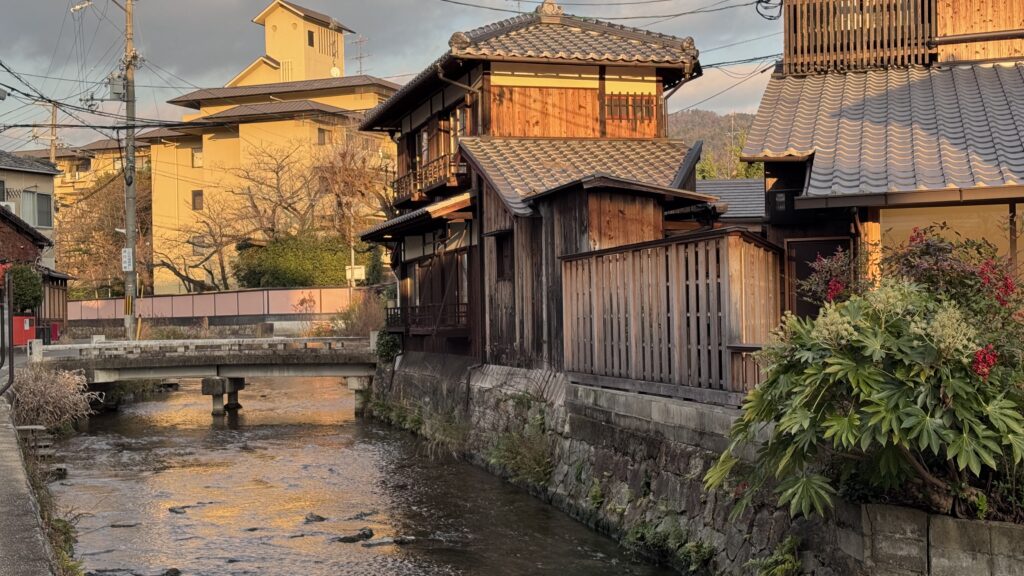
Staying at a high-rise hotel instead of a ryokan doesn’t make your experience less authentic; one doesn’t cancel out the other. So instead of thinking about how to experience the authentic Kyoto, I say focus on what kind of experience you’re looking for while you’re exploring this multi-faceted city?
Do you want to see mostly the spiritual side of temples and shrines? Or are you fascinated by the architectural designs of Kyoto’s ancient castles and palaces? Or maybe you’re a foodie looking to experience Kyoto’s history and culture through its traditional and, surprisingly, modern and diverse cuisine?
There’s no one way, or even a right way, to experience Kyoto. Your way of seeing Kyoto should depend on your interests and on how you want to spend your time and energy. And yes you can do that in one day if you plan thoughtfully.
What to Expect From Crowds in Kyoto Throughout the Day and by Season
Avoid Crowds by Visiting Popular Sights Early or Late
Some sights are crowded regardless of the season. Places like Fushimi-Inari or Kiyomizu-dera are filled with visitors at all times during the year.
The trick is to arrive early or late to the tourist sites and to walk farther into the grounds. Most people sort of hang around the entrance at Fushimi-Inari, but the higher up you hike, the less people there are.
Arriving late, even near dusk, has its moments because you get to see temples lit up by lanterns. Seeing the eerie, but comforting glow of lanterns lighting the pathways is pretty hard to come by if you’re rushing from sight to sight.
So arrive earlier or later in the day at popular sights and you’ll get the chance to enjoy it without the crowds.
Travel in Spring for Cherry Blossoms and in Winter for Tranquility
Cherry blossom season is a massive celebration. Huge festivals and dances take place during this time. Restaurants whip out their best dishes and chefs really show off their techniques. Geishas wear their most prized kimono because this is the event of the year for everyone.
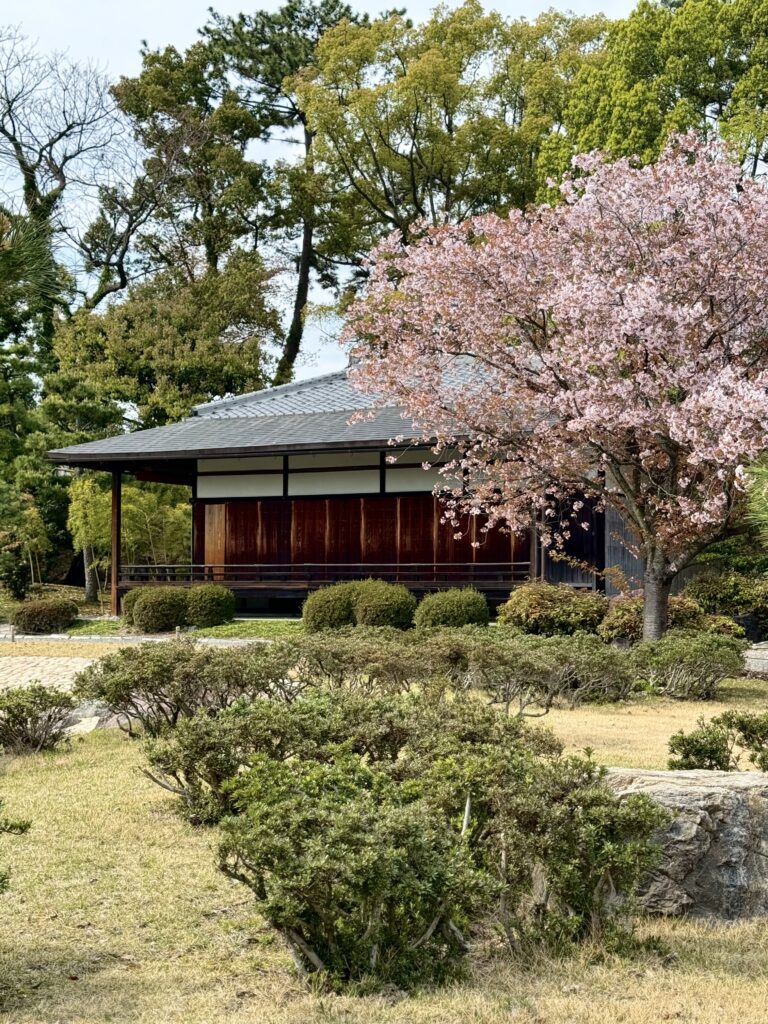
Yes, it will be crowded! But if you want to experience the frenzy of the celebrations, and bet your luck on seeing blossoms bloom, then spring is the best time to visit. Keep in mind prices skyrocket and things are harder to book.
If you’re more of the type who prefers a much slower pace, a more tranquil trip, then winter is the best time for you to visit Kyoto. It’ll be chillier but the streets really empty out and you can take all the time you’d like at major temples and restaurants. Also, the beauty of snow-dusted temples are absolutely picturesque.
Come in winter if you want room to stroll the city at your leisure, and without breaking the bank to enjoy it.
Why Kyoto Takes Longer to Explore Than Most Travellers Think
Kyoto is more expansive than it looks on a map
Kyoto is larger than it looks on a map. The streets look like they’re close by and easy to walk to, but the city is actually quite spread out. It’s also hard to gauge the change in terrain on a map.
A lot of major temples are built on hills, like the Silver Pavilion (Ginkaku-ji), and you’ll want to wear good walking shoes if you plan to explore the city on foot.
With that being said, Kyoto is a very walkable city. If you like walking, you’ll discover several minor temples, shrines, and unexpected discoveries along the way to major sights.
Trains, subways, buses, and taxis are efficient but time-consuming
Japan is infamous for its efficiency when it comes to public transportation. Trains, subways, and buses will get you across the city, but keep in mind that standing in line to buy tickets and chasing the trains take up time.
There are apps you can download to prepay for tickets, but given how complex sometimes the routes can get, I prefer to go to customer service and buy my tickets there. At least I know I’m getting the right tickets for the right route.
You can always order a taxi on the Uber app if you want to save time. I recommend this option the most if you’re visiting a sight halfway across the city. Taxis are fast even though they cost more, but you’re spending money to save time and energy, which I think is highly worth it, because then you’ll get to spend time at the sight you’re touring instead of wasting time looking for it.
Walking in Kyoto Takes Effort but It’s Worth It
My favourite option is to walk in Kyoto. You’ll discover unexpected shops and underrated temples. Walking is also the best way to let serendipitous moments happen naturally.
You might find a pottery shop or a cute cafe that’s not on Google maps and it could be your new favourite place for your trip. But don’t handcuff yourself to walking if it makes more sense to take a train or taxi. Do what works for you to save time and energy if you know it’ll maximize your enjoyment of Kyoto during your one day trip.
How to Experience the Best of Kyoto Based on Your Travel Style and Interests
For Travellers Seeking Kyoto’s Spiritual Side
Slow mornings at Coffee Bogota
How you find Zen in Kyoto depends entirely on how YOU want to pace your day. You can get up at 5 in the morning…or at 10AM! Your choice entirely. And the best way to start your mornings slow and zen-like is to enjoy a scrumptious breakfast at Coffee Bogota.
This cute joint features siphon coffee brewing. It’s a method where the coffee is brewed inside a two-chamber vacuum pot. Coffee grounds go in the top chamber; water in the bottom one. The water chamber is then heated which forces the water up to the chamber with the coffee grounds. Heat is then removed which creates a vacuum to suck the coffee down into the bottom chamber. The result is a smooth, tea-like coffee for your morning cup of joe.
Read: it’s a slooow process. But the coffee quality? Impressive. Nothing is rushed here; everything is made to order. Because as the saying goes: good things take time.
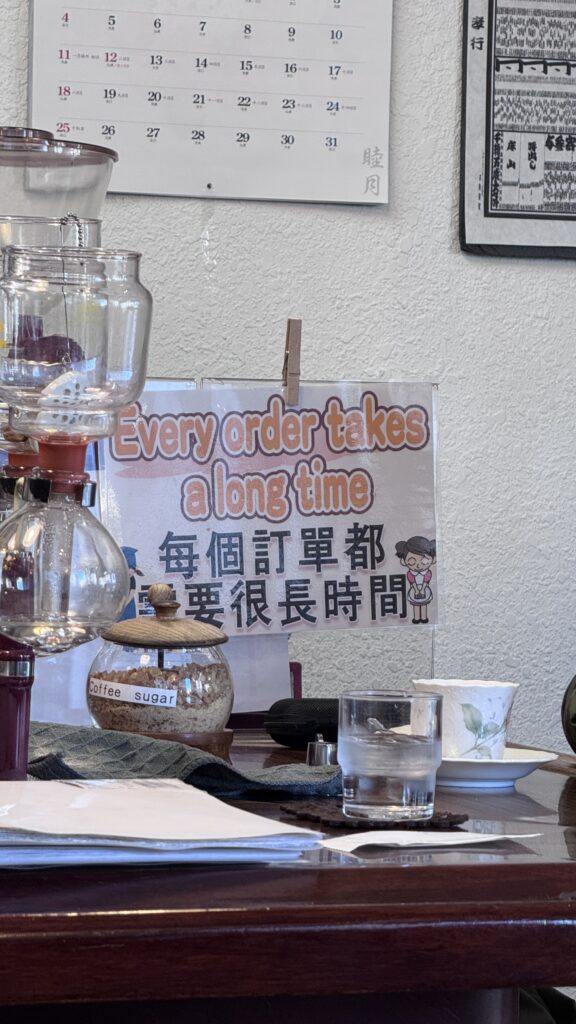
It’s best to come around mid-morning. Locals start filing in and the place starts to feel convivial and intimate. Order a classic homemade toast with homemade jams, eggs to your liking, with fruits, and vegetables on the side.
If you want your day to start off without rushing, then Coffee Bogota is where you go first thing in the morning for a meditative ritual of good coffee and home-cooked food.
Stroll the Philosopher’s Path
To really soak in the meditative aspect of Kyoto, walk the Philosopher’s path. It’s called that because the philosopher Nishida Kitaro from Kyoto university used to walk this path daily for contemplation.
It’s good to start walking in the mid-afternoon to catch the glow of the setting sun. Walk past winding canals, spot herons bathing in the streams, and see the traditional wooden houses lining the path. The light changes and the feeling of the atmosphere changes beautifully with it.
Take your time as it’s a long walk to the crossroads of where the path turns towards Ginkaku-ji, or the Silver Pavilion. Once you’re at the crossroads, walk up the Silver Pavilion path to reach the temple.
If you’re looking to feel the meditative atmosphere Kyoto is known for, then strolling the philosopher’s path is the best way to do it.
Beauty in simplicity at Ginkaku-ji (the Silver Pavilion)
Where Kinkaku-ji (the Golden Pavilion) boasts with gold, Ginkaku-ji (the Silver Pavilion) exudes modesty in silver. The best time to visit is during the final hour before closing to catch the rays of light over the gardens. And to avoid crowds.
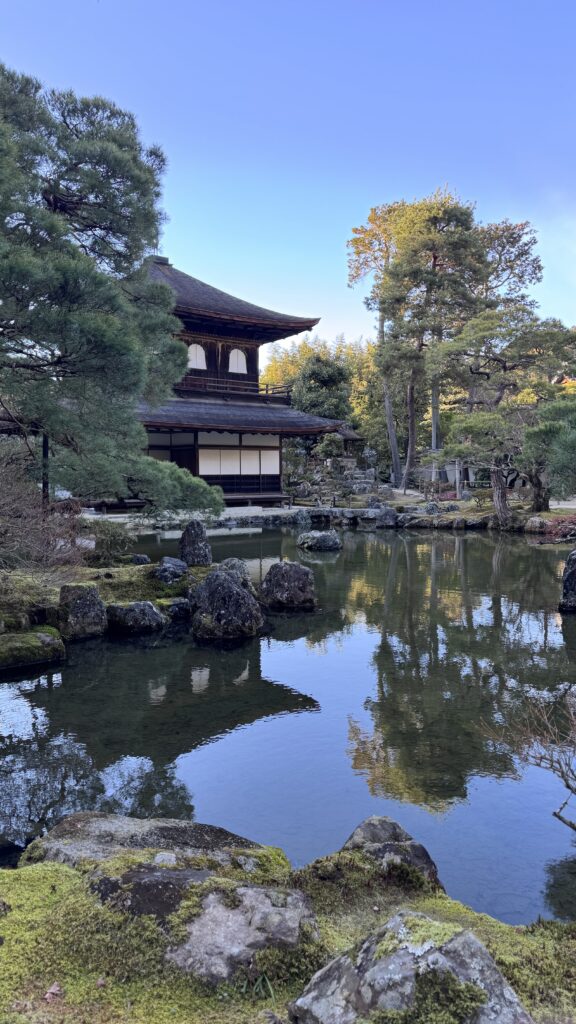
The first thing you’ll experience is the pensive walk through the tree-lined paths. Calm your mind, breathe in the scent of the trees. Then be prepared to be quietly impressed by the temple grounds.
You’ll notice a striking cone-shaped mound known as the Moon Viewing Platform. Its sculpted form was designed to reflect moonlight. Then stroll through moss gardens passing small streams. You’ll spot a tiny waterfall trickling over stones; delight in the sound of soft running water.
And as you walk, you’ll see the Silver Pavilion from several different angles. Like many of Kyoto’s temples, they invite reflection, contemplation, and noticing things from different perspectives.
Walking through the Silver Pavilion is perfect if you value taking the time to slow down and really see what’s around you.
Dusk at the Hachi Shrine
After visiting the Silver Pavilion, wander next door to the Hachi Shrine. Darkness should’ve settled in by now.
Notice the stairway leading up the shrine is lined with glowing lanterns. It’s almost eerie seeing the warm glow light up the steps, but it’s the sort of quintessential Kyoto moment found only after dark.
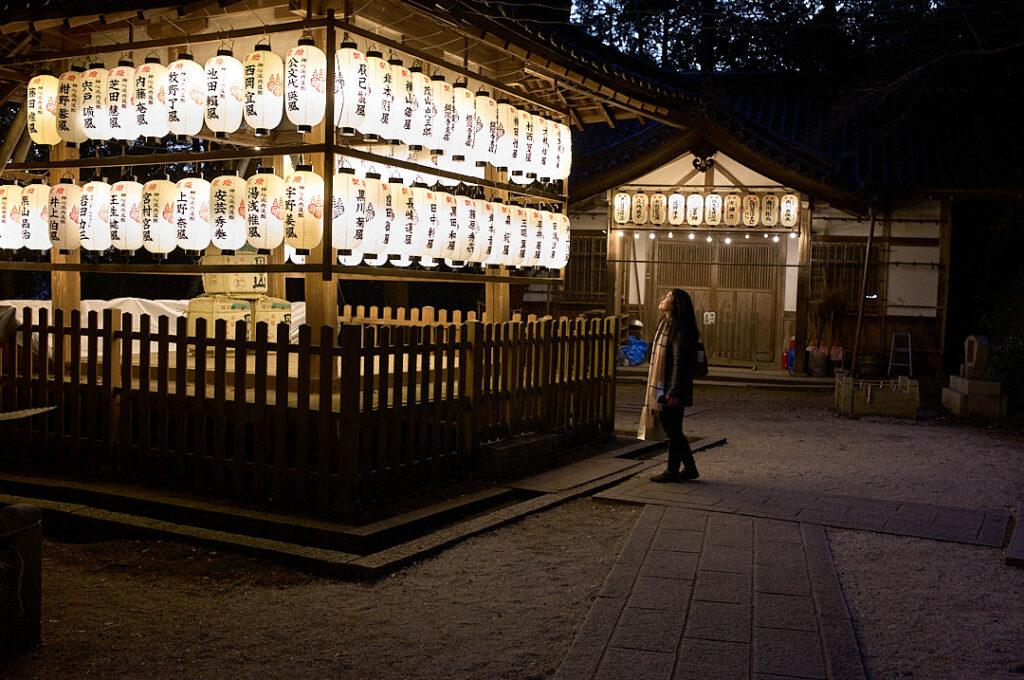
The Hachi shrine is dedicated to the eight directional guardian gods, who are believed to protect the city from evil spirits. The place where the Hachi shrine is located was historically considered Kyoto’s unlucky corner.
Most people miss this shrine entirely because they’re focused on finding the Silver Pavilion instead. It’s a special, quiet discovery for those who wander away from the big temples.
For a real touch of spirituality, make sure to wander Kyoto without a strict timeline to allow for serendipitous moments to happen.
Ending the day with Kaiseki
One of the most quintessential meditative moments in Kyoto is portrayed through kaiseki cuisine. It’s a style of dining where the plating is just as important as flavour. Small courses arrive on handcrafted lacquerware specially chosen to complement the season.

Food flavours are balanced, colours are vivid, textures are intriguing. Expect a slow and thoughtful meal to end your day. A flexible and affordable way to enjoy kaiseki is at the Minokichi Hotel New Hankyu restaurant.
They offer several prix fixe menu options ranging in prices from mid-tier to more premium options. It’s a great way to experience kaiseki that fits your taste and budget.
If there’s one meal you should prioritize for your one day in Kyoto, it’s a contemplative kaiseki dinner.
For Travellers Looking to Discover Kyoto’s History and Traditions
Geisha traditions in Gion
Kyoto is synonymous with the term geisha. These women are masters of the art of conversation, tea rituals, and traditional dance. They’re important preservers of Kyoto’s traditions and, for travellers who love history, Gion is the place to learn about, and even glimpse a geisha in full regalia.
Head to Gion in the late afternoon to really enjoy the atmosphere. The crowds thin out and you can take your time touring the Geiko and Maiko museum. I had a newfound appreciation for how much work geishas have to put in for every performance when I saw their delicate headdresses, the intricate ways they put on their makeup, and the complex ways they dress in their silk kimonos.
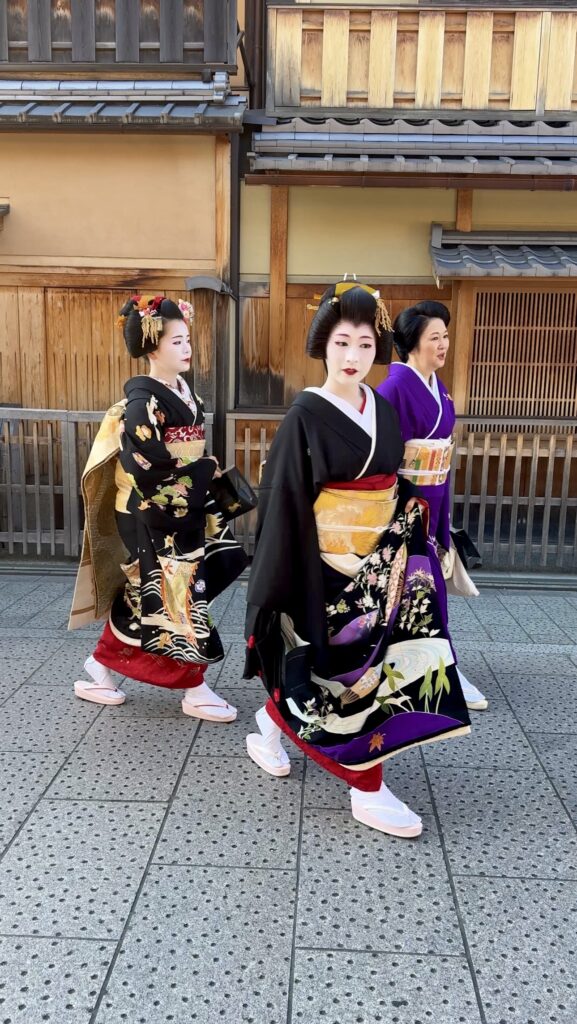
It makes me rethink how simple my daily routine is!
The real treat for me was getting to see a short maiko dance performance right inside the museum. You first wander through the kimono exhibit. Prepare to be dazzled by the gorgeous patterns on the kimonos. Then you enjoy a lovely dance by a maiko and you’ll be given some souvenirs from her, such as a personal business card and postcard.
For a rich experience in learning about geisha culture and traditions, Gion is the obvious place to go, even if it’s only for a couple of hours.
Wandering Kyoto’s preserved streets in Higashiyama
If you’re looking to experience ancient Kyoto at its most romantic, then strolling on Ninenzaka and Sannenzaka is where you go. You know that one popular photo of a tall pagoda tower in the distant background with wooden houses up close in the foreground?
You know which one I mean.

Don’t scoff! Yes, the neighbourhood is Instagram famous, but that doesn’t take away from how special the place is just because it’s popular. If you end up around here about 1 or 2 hours before stores close, you’ll feel what ancient Kyoto must’ve felt like. The lanterns light up, wooden houses complement the atmosphere, and tourists start to leave.
You’ll feel as if you time-travelled back to imperial Japan.
And the best part I found about arriving a few hours before shops closed was that I could actually shop at the shops. I stumbled into a washi paper store (traditional Japanese paper) and bought myself an adorable washi-paper journal featuring a hand-stitched maiko on the cover. Every time I write in it, it reminds me how little moments become memorable when you let yourself wander.
For travellers who only have a day in Kyoto and who want to experience the ancient capital in its preserved glory, Ninenzaka and Sannenzaka should be on your itinerary.
Pilgrimage to Kiyomizu-dera
Kiyomizu-dera is imposing and architecturally stunning. The Yasaka pagoda (yep, that famous tower that pops up in photos every time you search for Kyoto) is only rivalled in Instagram fame by the Kiyomizu-dera temple (that other picture showing a large balcony overlooking cherry blossoms that pops up each time you search for Kyoto).
Again, it’s a popular tourist spot and yes, it is absolutely worth it to visit here.
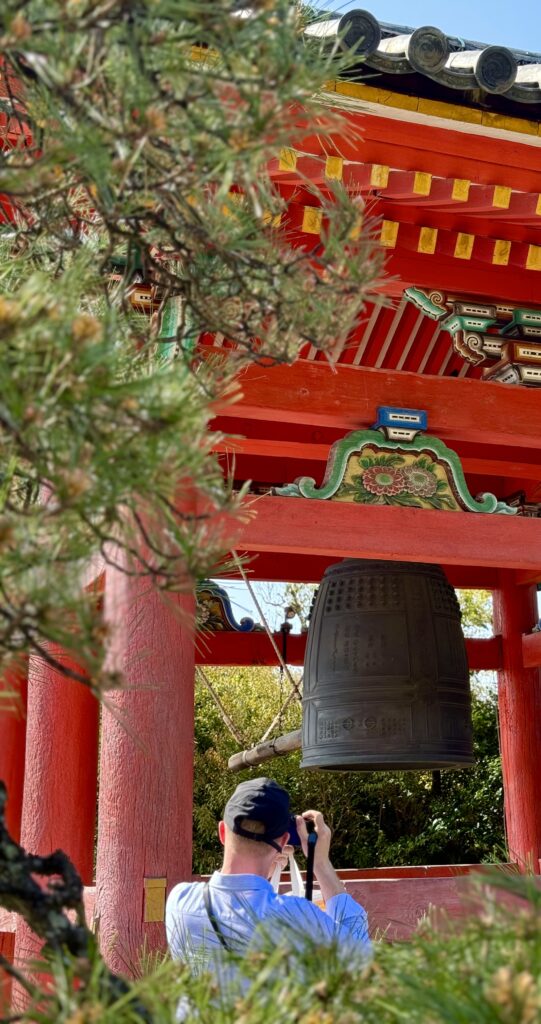
Wear very good shoes because walking uphill from Ninenzaka to the Kiyomizu-dera temple is physically exhausting, especially in the heat. But the walk is ceremonial and the view is grand once the temple appears.
I loved seeing the men and women dressed in kimonos that contrasted in colours to the temple. They added to the whole scenery and made it feel even more like I had time-travelled back to ancient Japan.
The temple itself is vast and complex, and I found that focusing on a good few main spots for a view of the city below, made it more enjoyable than trying to run through the whole thing. What makes this temple visit really pay off is to stand on the balcony jutting out over the city. You get an incredible view of the streets, mountains, and cherry blossoms if they’re in bloom.
If you’re someone who loves wandering through old streets and then being rewarded with ancient architectural wonders, then this temple is an iconic landmark that’s worth making the hike for.
Ending the day with Kaiseki
One of the dining traditions in Kyoto with historical relevance is kaiseki cuisine. The nobility enjoyed seasonal dining where the best ingredients were showcased on gorgeous lacquerware.
Kaiseki is where presentation is just as important as flavour.
A flexible and affordable way to enjoy kaiseki is at the Minokichi Hotel New Hankyu restaurant. They offer several prix fixe menu options ranging in prices from mid-tier to more premium options. It’s a great way to experience kaiseki that fits your taste and budget.
When I had my first kaiseki meal, I realized how aesthetics complements flavour and how it all sums up emotionally. Every little detail is taken into consideration to present the most perfect dish.
If there’s one meal you should prioritize for your one day in Kyoto, it’s a traditional kaiseki dinner. A perfect complement to your itinerary of experiencing Japan’s old imperial capital.
For Travellers Fascinated by Kyoto’s Architecture and Design
Palace grandeur at Nijo Castle
Nijo Castle is a grand fortress (like the Alhambra in Granada, Spain) complete with moat and landscaped gardens. It’s a great example of castle-palace architecture, and if you’re an architecture aficionado, touring Nijo Castle is a must.
The main attraction is the Ninomaru Palace. As you approach, notice the almost S-like roof-line of the Karamon Gate. This gate was inspired by Chinese architectural styles popular at that time reinforcing how art isn’t static; it travels and inspires other cultures to adopt it.
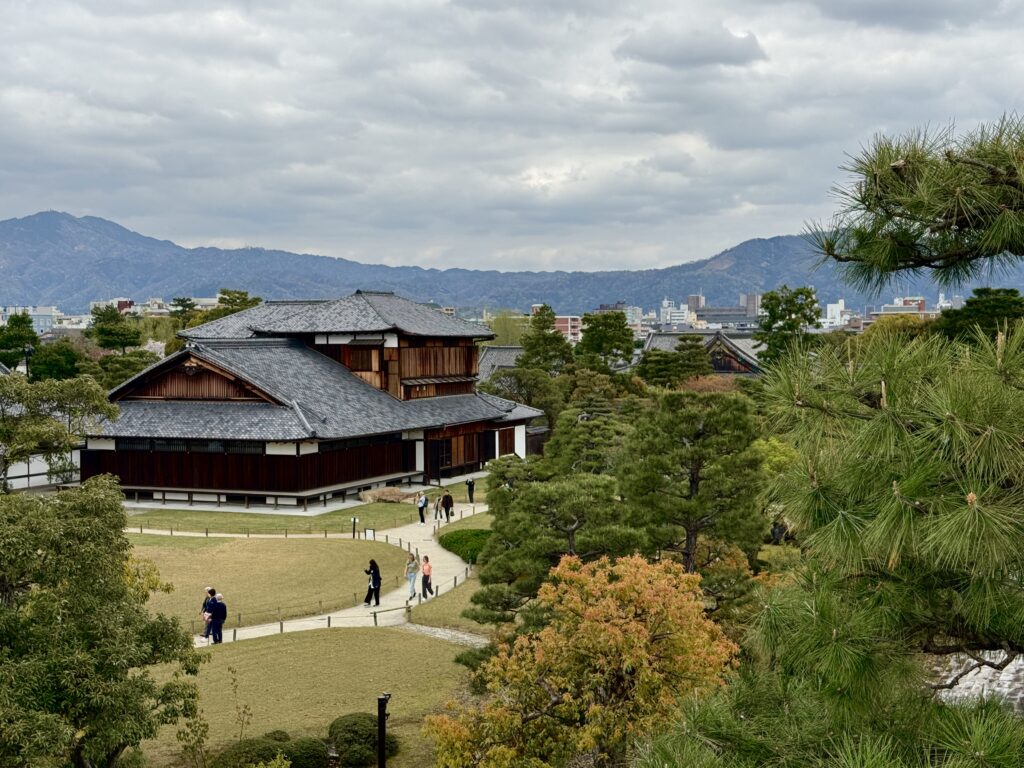
Enter Ninomaru Palace and be amazed by the stunning paintings of tigers and cranes on the silk screens. Take a good look at the tiger faces and note how they look a bit awkward, even comical at times. That’s because they’re entirely painted from second-hand descriptions; the artists had never actually seen a tiger. All the same, these fantastical paintings are what makes the inside of Ninomaru Palace a real wonder.
Nijo Castle is a grand palace fortress contrasted by delicate design and beauty. For travellers who appreciate design and architecture, this has to be one of the sights on your itinerary.
Golden reflections at Kinkaku-ji
The Silver Pavilion (Ginkaku-ji) might be humble in its silver coating, but Kinkaku-ji boasts in all its golden glory. Yes, the entire temple is truly covered in gold leaf, and it stuns in the sunlight and reflects brightly in the pool. And like the Guggenheim in Bilbao, Kinkaku-ji’s exterior design is stunning on its own.
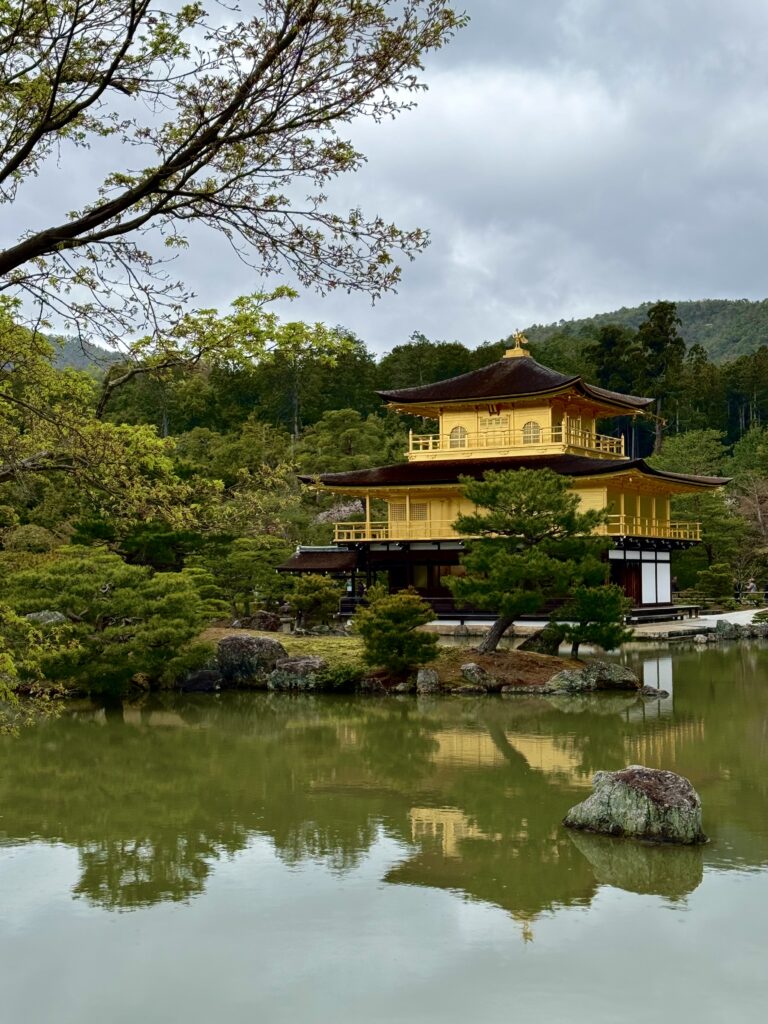
Come here around late afternoon to avoid the heavier crowds. The site itself is pretty small because you can’t actually enter the golden temple. But walk the perfectly manicured pathway to admire the temple in all its forms. Notice that each level of the temple has architectural significance. The ground floor is designed in the Heian court palace style, the second floor resembles the traditional home of a samurai, and the top floor takes the form of a Chinese-inspired Zen temple.
It’s really a perfect 3-in-one mix of architectural styles you can see in one setting!
As you make your way around the temple grounds, stop by the souvenir shop. Just because you’re sightseeing that doesn’t mean you can’t do a bit of shopping while you’re at it! Yes the shop is a bit touristy, but it’s quite literally charming because you can buy some charms here!
I got my sister a little good luck charm shaped into a tiny traditional Japanese school backpack. In its teensy pouch it contains a good luck talisman meant to bless the person to achieve academic excellence. It’s a charming charm to remember the Golden Pavilion by and of how design and symbolism work in harmony.
If you’d like to experience a short, but sweet stroll to see how landscape and multi-disciplinary architectural designs blend together, then definitely pay Kinkaku-ji a visit.
Zen rock garden design at Ryoan-ji
The ancient name Kyoto meant the Capital of Peace and Tranquility. And the famous Zen rock garden of
Ryoan-ji was intentionally designed to help travellers achieve those sentiments.
A Zen garden is where the white gravel is raked in a special circular pattern with 15 stones set on it. But the trick is that you can only ever see 14 stones at a time. The stones are set so that one is always just hidden from view and you can’t see it unless you move around.

This is a gentle reminder that all people have blind spots; limited or incomplete perspectives. But if you do end up seeing all 15 stones in literally one sitting: then you’ve reached nirvana! A Zen garden is simply designed, but it’s the simpleness of it that can generate complex feelings within the viewers.
If you’ve been wondering how architecture and design can move people emotionally, and even to a higher state, then you should definitely visit Ryoan-ji to see a classic example of a Kyoto Zen garden.
Ending the day with Kaiseki
A wonderful way to appreciate design and architecture is through Kyoto’s signature cuisine: kaiseki. Kaiseki is a set menu spotlighting the freshest ingredients of the season. This is where chefs can really show off their skills in bringing out the essence of a dish.
Kaiseki meals also involve impeccable food presentations with hand-painted lacquerware. I marveled at the paintings of cranes on the ceramic plates. The chef placed the slices of fish and pickles to make up the wings and body of the crane; the whole thing looks like it’s about to take flight!
Each dish in a kaiseki meal is simple, yet features complex shapes and textures. Each plate spotlights ingredients in its essential forms and flavours and, when combined with the gorgeous plating, they look like miniature forms of edible architecture.
If you’re a traveller who admires art and design through food, then enjoying a kaiseki meal is the perfect way to bookend your one day in Kyoto.
For Travellers Who Want to Experience Kyoto’s Food and Cultural Traditions
If you’re someone who loves to discover a city through its cuisine, then adding a food trail to your itinerary is the way to go.
A taste of old and new Kyoto
For your 1 day trip to Kyoto, get a taste of old and new Kyoto (literally!) to experience its past and its present. I discovered my favourite bites when I wandered down the covered market at Sanjo Dori after touring the expansive Nijo Castle.
Sanjo Dori has rows and rows of shops selling homemade goods, but the one that caught my eye had a wooden sign with a triangle: the infamous onigiri.
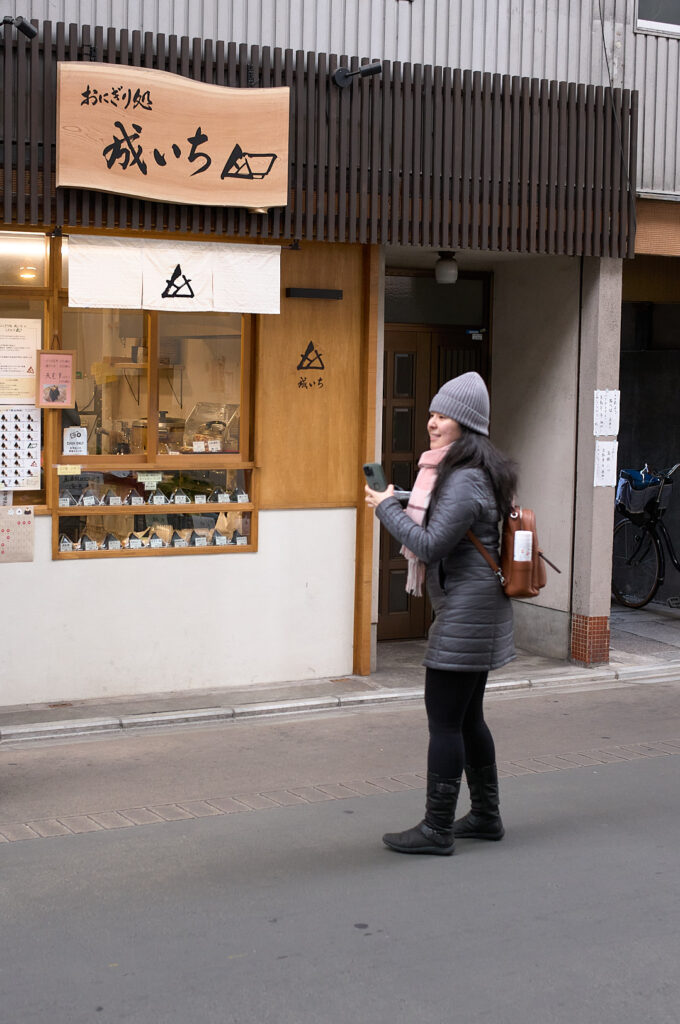
Onigiri is a rice ball pressed into a triangle and stuffed with fillings, like spicy salmon or pickled plums, and wrapped in seaweed. It’s an easy handheld snack that dates back over 2000 years. An ancient snack? Absolutely so. As you bite into the onigiri, remind yourself that the Japanese nobility once snacked on this delicious bite during Japan’s feudal times.
And now for something slightly more modern. Stroll down just a bit from the onigiri shop and you’ll see the pink and white stall selling delectable sesame crêpes. What makes this shop unique is that the owner specializes in filling her crêpes with hand-roasted sesames of all kinds: golden sesame, black sesame, white sesame. I adore the fluffy crêpe filled with black sesame and black sesame cream: it is heaven rolled into a pancake.
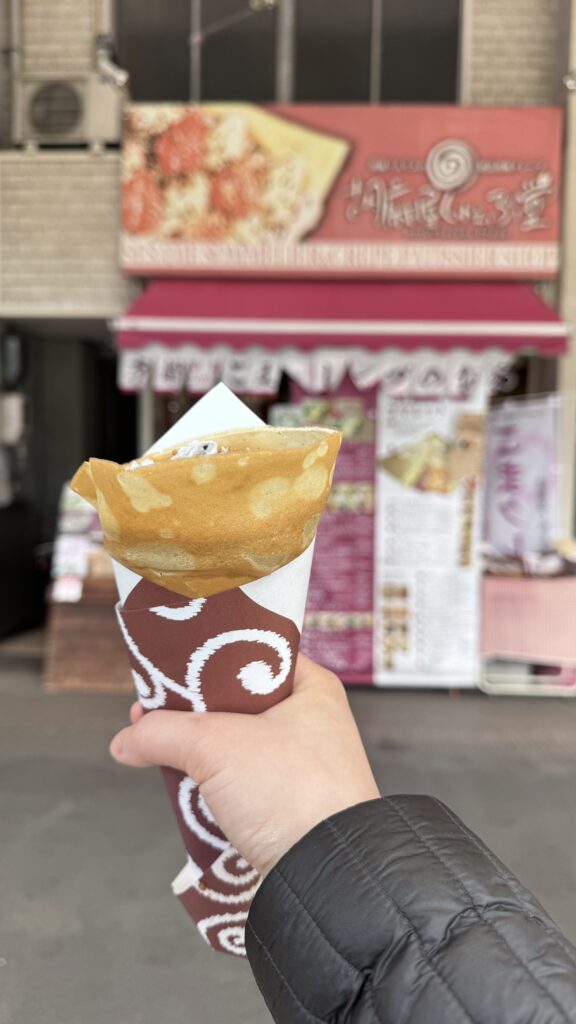
What you’ll taste in these two different dishes is the contrast of old and new: onigiri to represent the past and crêpes to represent the newness of the city. If you’re a traveller who loves to discover a city’s history through food, then these two bites should be on your gourmet list.
A surprising taquería by Nishiki Market
Stroll down Sanjo Dori towards Nishiki Market and, before you head straight into the amusement park of a fish market, turn your head to the right and spot the taco stall.
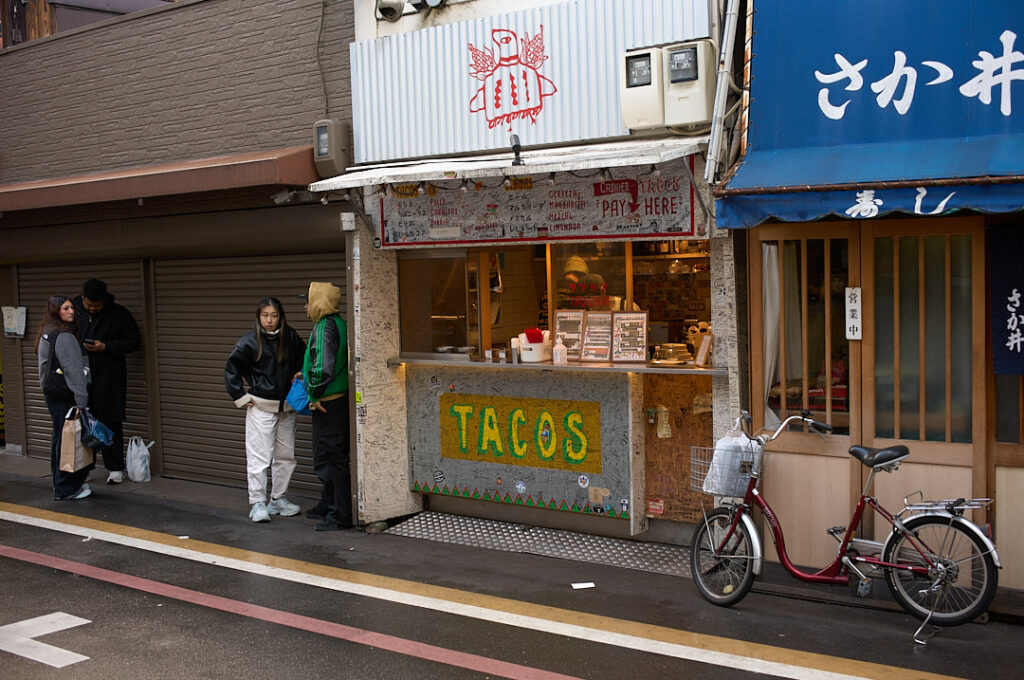
Yes, you read it right: stop by the taquería stall wedged into the side of the street run by a taco enthusiast. This was one of my favourite moments of serendipitous discovery because I tasted some of the most flavourful tacos outside of North America!
We’re talking actual masa corn tortillas hand-pressed inside the stall with the menu written in Spanish. It was a delightful contrast to the atmosphere outside Nishiki market. Order a few birria tortillas for a midday snack and revel in the delicacies making their way to Kyoto culture.

If you love trying delicious food from other cultures while visiting another culture, then make sure to stop by the taco stall.
Seafood for the senses at Nishiki Market
Nishiki Market is an amusement park of seafood. Be ready to overload the senses while you walk down the narrow lane flanked by extravagant displays of seafood. It’s a real sight to behold, but I wouldn’t really recommend eating the seafood here as I find it more for show than taste.
With that being said, definitely admire the shop windows of giant octopus tentacles, severed fish heads, and giant spindly crabs. This place is a photographer’s dream even if you’re not really here to eat.

I personally love the New City Bakery cafe here. Nope, it’s got nothing to do with seafood, but it’s another serendipitous find because the coffee, babkas, and croissants here are reminiscent of the pastries I had in France.
It’s a truly glorious way to take a break from sensory overload. While sipping a flat white here, I reflect on how wonderful it is that different food cultures make their way around the world and end up in unexpected places.
Definitely add Nishiki Market to your list if you’re a traveller who loves learning about a culture through its food.
Traditional arts at Gion Corner
Gion is the official geisha district of Kyoto. It’s where young ladies train to be geishas and where the traditional wooden teahouses still operate. Though munching your way through Kyoto is a wonderful way to absorb the culture, another profound way to experience Kyoto is through geisha dance performances and tea ceremonies.
Head to Gion in the late afternoon to catch a dance performance by a maiko and also to witness a tea ceremony ritual. I stumbled into the maiko and geiko museum late in the day and was lucky enough to get tickets for a maiko dance performance.

The young maiko walked onto stage wearing high platform wooden heels and dressed in full ceremonial kimono robes: she was stunning. The wooden heels were so high I couldn’t imagine how she learned to dance in them. Her movements, though weighed down by her kimono and headgear, were deliberate, precise, graceful. It was quite a feat to witness.
Geishas are also keepers of the tea ritual. It’s a ritual because the tea isn’t simply mixed with hot water and poured into a cup; it’s an intricate ceremony where the tea is prepared and served with the utmost delicacy. Make sure to find a program with a tea ceremony involved and you’ll get to witness the living traditions of the art of dance and the art of tea.
Travellers who love to learn about another culture through performances and ceremonies (like flamenco dance in Seville), then Gion is where you should go to experience geisha culture: the essence of Kyoto traditions.
Ending the day with kaiseki
A true Kyoto cuisine experience must involve kaiseki. Kaiseki is a set menu spotlighting the freshest ingredients of the season. Each season has its own special features: winter usually spotlights hotpots while spring features dishes inspired by cherry blossoms.
How each dish tastes is just as important as how it’s presented. You’ll get dishes with seafood, meats, and vegetables cooked to show off its essence. And each dish is plated on handpainted lacquerware.
I’m always in awe of how the courses arrive in small portions (almost like tapas!) but in the most simple, yet intricate, arrangement. Like a single bowl for a piece of fish on perfectly cooked rice, or another tiny bowl for pickles, and another one for delicately cooked vegetables. It’s a real feast for the stomach as well as for the eyes.
A flexible and affordable way to enjoy kaiseki is at the Minokichi Hotel New Hankyu restaurant. They offer several prix fixe menu options ranging in prices from mid-tier to more premium options. It’s a great way to experience kaiseki that fits your taste and budget.
For travellers with only 24 hours in Kyoto, ending the day with a traditional kaiseki meal is the perfect way to wrap up your trip.
Less Is More in Kyoto: Why Trying to See It All Often Leads to Disappointment
Let’s be real: You won’t see all of Kyoto in a day. Or even a week. Or even a year. And not even in a lifetime.
And that’s OK! The goal of your one day trip to Kyoto isn’t to see everything; it’s for you to let yourself create the experiences you want to have and to fully enjoy them on your terms.
Ironically, the harder you try to avoid missing out by cramming your itinerary, the likelier you are to bounce from temple to temple without really appreciating any of them. And please don’t try to cram in day trips to Nara or Kobe; you won’t even see Kyoto properly if you try do!
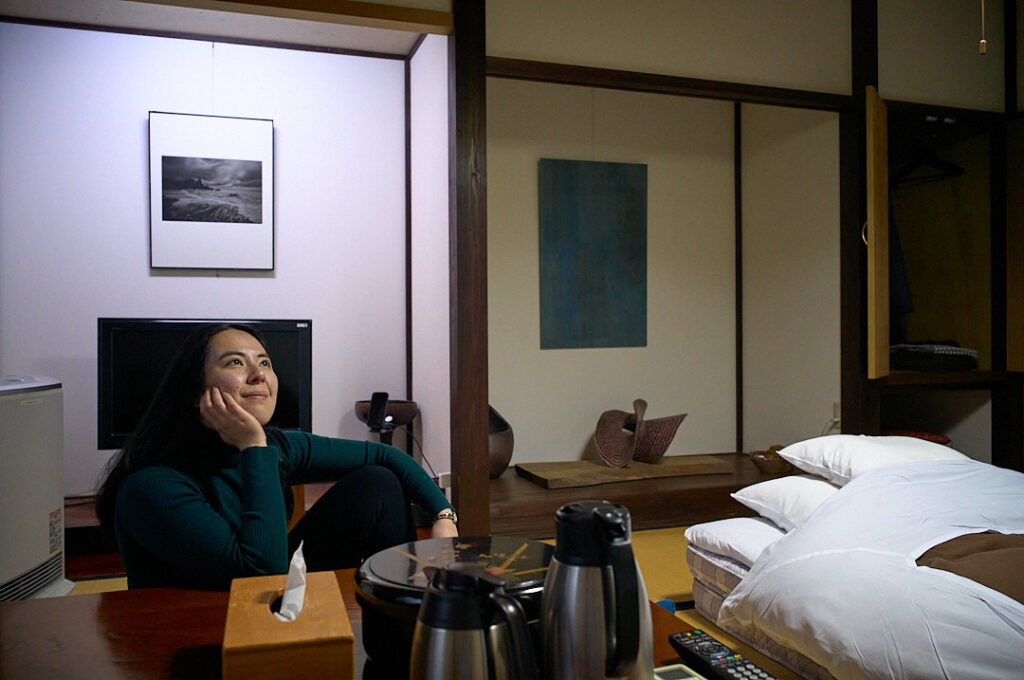
Because you want to positively reminisce about the trip afterwards: the fragrance of burning incense at the shrines, the eerie glow of lanterns at night, the taste of kaiseki after you’ve left Kyoto. Quality of experience beats quantity of things seen every time.
Don’t compete with other travellers on the number of places you’ve been to: build an itinerary that works for you and that values the experience you want to have. The memories you create from this trip are far more valuable than the number of attractions you managed to check off.
Enjoy Kyoto Without Worrying About What You’re Missing
Repeat after me: there is no right way to do Kyoto. Or to travel the world for that matter. How you experience Kyoto is up to you. And no matter how efficiently you plan your trip, you will miss a few things. And that’s perfectly fine!
Focusing on a few highlights in Kyoto, and truly immersing yourself in them, is way more precious than trying to check off a list of temples just to say you’ve been there.
And trust yourself while you’re building your itinerary. Get my free travel planner to help you out.
You know best what experiences you’d like to prioritize; the moments you value. Focus on what you want to gain from the trip instead of what you’ll miss out on, and you’ll end up creating the trip that’s the most right for you.