
This post contains affiliate links to trusted partners and as an Amazon Associate, I earn from qualifying purchases at no extra cost to you. All opinions are my own.
Is this your first time planning a trip to Kyoto and you’re unsure where to begin?
Kyoto is a city of temples, Zen gardens, and a strong geisha culture. But planning a trip here can feel overwhelming. How many days do you actually need? Where should you stay for value, comfort, and convenience? Most importantly: what’s the best time to visit?
I’ve visited Kyoto in two completely opposite seasons: during the hectic cherry blossom season and the quiet New Year’s of winter. Each trip showed me different faces of the same city, and both taught me what actually matters when planning your first visit.
This guide is everything I wish I knew before going to Kyoto for the first time. You’ll learn how to plan your trip without overstuffing your itinerary, where to stay for easy access to the city, how to get around smoothly, and what to expect when it comes to culture, food, and daily logistics.
By the end, you’ll have a clear plan and the confidence to experience Kyoto in ways that feel thoughtful, not FOMO.
Your Kyoto Trip Planning Guide at a Glance
Short on time? Here’s everything you need to plan for your first trip to Kyoto.
Timing Your Trip
🌸 Best Time to Visit: Spring versus Winter
Spring brings cherry blossoms and festivals (but crowds and higher prices). Winter offers quiet temples, lower costs, and a more serene experience.
🗓 How Many Days You’ll Need
1 day for a quick intro, 3 days for a balanced cultural trip, 5 days to explore deeper and to add day trips like to Nara or Kobe.
Planning Your Itinerary
🧭 How to Plan Your Days
Focus on 1–2 key sights per day, then leave space to wander. Unplanned moments make the best travel memories.
🧘 Avoid Temple Fatigue
Limit temples to one or two daily. Mix in cafés, markets, and neighbourhood walks.
🏯 Must-Do Cultural Experiences
Visit a major temple, explore Gion, and book a kaiseki dinner for a well-rounded Kyoto experience.
Travel & Logistics
✈️ Getting to Kyoto
Fly into Osaka Kansai Airport, then take the Hello Kitty Haruka Express to Kyoto Station (about 1 hour).
🚶 Getting Around Kyoto
Walk when possible. Use taxis for longer trips (order them on Uber), and use buses or subways for everything else.
📶 Stay Connected (eSIM)
Buy an Airalo eSIM before arrival for instant data access.
📅 What to Book in Advance
Book hotels and restaurants early for cherry blossom season. Reserve geisha theatre performances ahead of time.
Where to Stay
🏨 Best Area for First-Time Visitors
Stay centrally to save time and avoid complicated transit routes.
🛏 Recommended Hotel: Richmond Premier Shijo
A modern, centrally located hotel with spacious rooms and easy access to Gion, Nishiki Market, and major sights.
Food and Dining
🍙 Quick Eats: Onigiri and Markets
Grab fresh onigiri in Sanjo-dori and explore Nishiki Market for casual food.
🌮 Unexpected Finds
Try the taco stand near Nishiki Market for a surprisingly great bite.
🍱 Kaiseki Dinner
Book a traditional multi-course meal to experience Kyoto’s seasonal cuisine.
Customs and Etiquette
🙇 Kyoto Etiquette Basics
Bow when greeting, use cash trays, avoid blowing your nose in public, and show appreciation when dining.
👘 Geisha Etiquette (Gion)
Don’t stop or follow geishas for photos. Be respectful and let them pass.
Money and Safety Tips
💴 Cash versus Cards
Cards are widely accepted, but smaller shops prefer cash. Use 7/11 ATMs and carry smaller bills.
🎒 What to Pack
Travel light with carry-on luggage. Pack layers for spring or warm, compact clothing for winter.
🛡 Safety in Kyoto
Kyoto is very safe for solo and first-time travellers. Stay aware, but overall it’s low stress.
🗣 Language Barrier
English is widely understood. Use simple Japanese phrases and Google Translate when needed.
Avoiding Crowds
⏰ Best Times to Visit Sights
Visit temples 1–2 hours before closing for fewer crowds and golden light.
🌙 Evening Exploration
Walk through areas like Ninenzaka or visit shrines at night for a quieter, more atmospheric experience.
Don’t Overplan
✨ Plan Less, Experience More
Book your essentials, then leave room to wander. Kyoto’s best moments often happen when you least expect them.
Keep reading to get the full details.
When is the best time to go to Kyoto?
The best time to go depends on the experience you want: frenetic energy during cherry blossom season, or tranquil walks through snow-covered temples.

I visited Kyoto during their cherry blossom season in April. The city is glorious, yet also more expensive, crowded, and hectic. It’s much harder to get into restaurants with no reservations and you’ll need to book hotels a year in advance.
You’ll also have to tolerate the crowds. And it’s hot. But this is the time when grand festivals for geisha dance performances are held.
I’ve also seen Kyoto in winter in early January. It’s cool (but not freezing cold!); perfect for walking days. The city empties out, so it’s less crowded. Restaurants and hotels are much more affordable compared to high season.
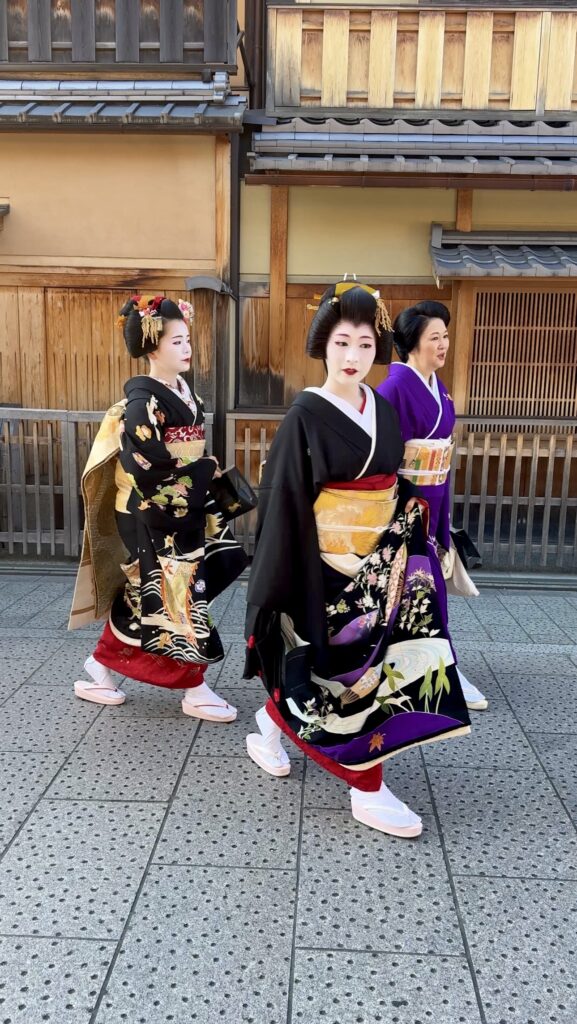
Winter season lets you take your time. New Year’s also gives you the opportunity to glimpse maiko (apprentice geisha) in Gion and see them in their formal black-crested kimono. It’s a style of kimono they only wear at New Year’s and it’s a magnificent sight. There are smaller-scale geisha performances, but just as noteworthy.
Go in spring if admiring the legendary sights of cherry blossoms has been on your bucket list for forever. But go in winter if experiencing Kyoto at its most serene is more aligned with your travel style.
How many days do you need in Kyoto without feeling rushed?
Are you planning a dream trip with time for day trips? Or are you looking for a sweet balance between visiting top sights and experiencing major cultural performances? The trick is to prioritize quality over quantity regardless of the number of days you have.
How to plan a Kyoto itinerary based on your travel style and without over planning
You won’t feel rushed even on a 1 day trip to Kyoto if you plan it smartly. With one day to enjoy the city, see a major temple (like the stunning Golden Pavilion), grab dinner at Nishiki market, and buy a washi paper souvenir notebook (a speciality of Kyoto) in the Higashiyama historic district.
But if you love history and architecture, 3 days is the perfect, balanced itinerary. You get time to tour major temples like Kiyomizu-dera or Fushimi-Inari. You get to try a couple of different cuisine styles like kaiseki (seasonal cooking) or izakaya (pubs specializing in grilled skewers of all kinds). And you can even tour a few museums, like the geiko and maiko exhibition in Gion.

5 days in Kyoto is the ultimate itinerary to indulge in. Not only can you take your time touring major temples, you can discover lesser-known hidden gems. Bumping into the Hachi shrine at night while it was lit with eerie glowing lanterns was the ultimate highlight for me.
That might not have happened if I was on a shorter timeline. 5 days lets you fit in day trips to Nara (known for their once sacred deer and the largest wooden temple in the world) and Kobe (yes, the city of original Kobe beef).
Spend 1 day if Kyoto is part of a larger Japan trip. It’ll give you a good introduction to the city. Spend 3 days if you’re looking to experience a bit of history and temple worship. Spend 5 days if you plan on making Kyoto a good part of your trip with time to spare for day trips.
How to experience Kyoto culture through temples, geisha districts, and the Nishiki market
August 1945. President Truman and his war council were debating which cities in Japan they should drop the atomic bomb on. Kyoto was on the list, but a member of the council argued against bombing Kyoto. And now Kyoto still stands today with its brilliantly preserved shrines and temples.
There are definitely major temples and shrines that I believe everyone should see, like the Silver Pavilion. But the best way to discover spiritual places is to wander into them by meandering on the side streets. You’ll discover some gems hidden in plain sight.
Geishas are performers skilled in the arts and conversation. You’ll have a high chance of spotting them in their full regalia in Gion. A wonderful way to appreciate their art is to watch a dance performance in Gion Corner.
And above all, food is at the heart of Kyoto culture. Book a kaiseki experience and you’ll be treated to a sumptuous dinner. Kaiseki cuisine is a set menu where seasonal ingredients take centre stage. The impeccable plating makes for a visually stunning presentation and gourmet experience.
If you want a well-rounded Kyoto cultural experience, then spend time contemplating in a temple, enjoy a geisha performance, and savour kaiseki cuisine.
Kyoto etiquette to know before your first visit to Japan
As good travellers, we try to be polite, self-aware, and respectful wherever we go. But Japan is infamous for their high expectations of good manners.
Key things to remember:
- bow your head and body to acknowledge the other person when you enter, or exit a place, or to signify thank you after a transaction.
- put cash in the tray when paying. Most shop owners don’t handle money hand to hand.
- try to avoid blowing your nose in public. Head to a washroom if you can find one.
- slurp your noodles! Yes, slurp them to show how tasty they are!
- say oishi! (meaning delicious) to tell the chefs you appreciate their cooking. This is a fun way to show you’re a culturally-aware traveller who enjoys the local cuisine.
Follow the general guidelines I’ve listed and you’ll be respected in Kyoto as a cultured world traveller.
Will you see geishas in Kyoto? What to expect in Gion and how to behave
Geishas are emblematic of Kyoto. But always remember that they’re working professionals, not a tourist attraction to gawk at.
And here’s how you should behave if you happen to meet a geisha:
- never, and I mean never, stop them for photos. It’s rude to hold them up when they’re on the way to an appointment.
- don’t follow geishas for photos. I mean, take a few discreet pictures but don’t tailgate them.
- respectfully let them pass and give them a respectful bow as they walk by.
- don’t take pictures in Gion of residential alleyways. You’ll be fined a mighty fine if caught.
Although it’s wonderful to see a geisha in full regalia, always be respectful like you would to any other human being.

Cash, cards, and costs: how to handle money when visiting Kyoto
Withdrawing cash is easy in Kyoto. Head to any 7/11 convenient store and with your bank debit card, and take out what you need. Most businesses take major credit cards like Visa, but many smaller shops prefer cash.
So always have some cash on hand. Get some Japanese Yen at your local exchange counter back in your home country before you fly. This will come in handy when you take a taxi since most taxis only accept cash. I noticed some shops don’t accept 10,000 yen bills because they’re hard to count change for. Break down big bills at the bank for easier handling.
Most shopkeepers don’t handle cash by hand. Put the cash in the tray for them to take and to give you change back. Or there might even be money machines at the store. This is where you simply insert the cash into the machine, it counts the money automatically, and then it disperses the exact amount of change. No fuss, no muss.
How to get to Kyoto from Osaka Kansai Airport
Kyoto doesn’t have its own airport. The airport you fly into is Kansai International in Osaka. From there, you hop onto the Haruka Express to downtown Kyoto. An easy way to spot the Haruka train? It’s completely tattooed with Hello Kitty images.

The Haruka train starts at Osaka airport and takes about an hour to reach downtown Kyoto train station. There are compartments by the train door for large check-in luggage. You can put your carry-on on the luggage rack above your seat.
Don’t fret about buying tickets in advance. Once you arrive at Osaka airport, head to the train station and to the ticket counter to buy a ticket.
How to get around Kyoto using public transport, taxis, and walking
Kyoto is highly accessible, but it’s also a vast city. Walking is the best way to get around and discover shops and hidden shrines.
But some temples are on the far edge of town. This is when taking a taxi is worth it, especially since they’re quite affordable. They start at 1000 yen and increase by 100 yen for every distance travelled. Order a taxi through the Uber app no matter where you are in the city.
Buses and subway trains are available everywhere. Check the map on the ticket machine in the subway to see exactly where you want to go and enter that in. You’ll be charged for the exact fare.
There are lots of options to get around Kyoto. Choose the one that makes the most sense to you depending on where you’re headed in the city.
How to stay connected in Kyoto with eSIMs
Kyoto is easy to navigate with the help of Google maps. Buy an Airalo eSIM for Japan before you take off. Install the eSIM and turn it on when you arrive. You’ll have instant access to data you can start using to navigate the city, check emails for confirmations, and for booking restaurants.
Make sure to turn off your local country’s data plan before arrival. You want to avoid being charged an astronomical sum for data from your local carrier!
What to book in advance for Kyoto
If you’re visiting Kyoto during cherry blossom season, then book hotels a year in advance. Lock in the better rates because prices double by the time spring rolls along. As for restaurants, definitely make reservations at popular places to avoid disappointment.
Geisha performances and Noh theatre are at their peak during this time. Absolutely buy tickets way ahead of time if you’ve always wanted to see a geisha performances.
Temple visits are mainly first come, first serve. You buy tickets at the entrance and it’s usually cash only.
Cherry blossom season is the main season you want to book for things in advance. During any other season, you can be a bit more flexible with your planning.
Where to stay in Kyoto for first-time visitors
Time is your most valuable asset. Stay near the city centre if it’s your first time in Kyoto at the Richmond Premier Hotel in Shijo. It’s only a 15 minute taxi ride from the central train station and within walking distance to major attractions (like Gion).

It’s a stylish, modern hotel. Though it’s not historically charming, you’re trading the charm for easy access to the city so you’re not wasting time hunting for directions. The rooms are unexpectedly spacious with large Western-style beds and sitting areas.
This is perfect for first-timers looking for a roomier hotel room with easy access to everything.
What to eat in Kyoto from street food to kaiseki dining
Kyoto offers impeccable food choices from street food to fine kaiseki dining. If you’re someone who loves to taste a bit of all-levels of cuisine, Kyoto is the place to do it.
Munch on fresh onigiri in Sanjo dori market. Sanjo dori is a long covered market with shops of every kind. Stroll in and find the triangle logo of a shop selling rice shaped into triangles held with seaweed and stuffed with fish or vegetables. That’s an onigiri and it’s the perfect, light snack to start the day.

Exit the market and make your way towards Nishiki market. There’s a food cart near the entrance selling fresh tacos. Yes, tacos. They’re made by a gentleman who’s clearly devoted his life to making the freshest, most flavourful tacos outside of Mexico. They’re delicious and it’s one of my favourite, unexpected finds in the city for food.
For dinner, treat yourself to an elegant kaiseki dinner. Kaiseki is a style of cuisine that showcases the freshest ingredient for the season. The dishes are paired with stunning lacquerware giving you a feast for the eyes and the palate.
Though Kyoto seems like it’s frozen in time, its cuisine shows how diverse and innovative the city really is.
What to pack for Kyoto and how to travel with luggage without stress
Whether you’re visiting Kyoto in spring or winter, it’s best to pack light and to use carry-on luggage. Trains have some space for large check-in luggage, but they get taken up fast. Carry-on luggage means you can swing it over your head and place it on the rack without having to fight for a large luggage spot.
For spring, pack a couple of light shirts, a hardy windbreaker, and a pair of sturdy pants. The light shirts will be cool enough for the weather and the windbreaker will come in handy when it rains.
For winter, pack Merino wool shirts. They’re warm, stylish, and won’t add extra bulk to your luggage. Wear a good pair of warm, walking boots that’s comfortable to walk in, but will also keep your feet dry. Wear a light Patagonia puffer that’ll keep you warm, but that’ll also easy to pack away.
Rotate through the few necessary shirts and pants for your trip. You’ll travel light and look good for the entire journey.
Staying safe in Kyoto as a first-time traveller
Kyoto is safe for solo travellers and first-time visitors. Like all trips though, you should always be alert to your surroundings. Keep your belongings close to you in crowded areas. Invest in a good travel bag that looks good and works well to securely hold your valuables
Japan has strict food regulations. Sanitation is a top priority so don’t worry about getting food poison. You can drink water straight from the tap.
Subways and trains are well-lit. There are almost always workers available to help you or answer questions if you’re stuck.
Overall, Kyoto is safe for all types of travellers, but especially for travellers on their first-trip to Japan.
What is the language barrier like in Kyoto and how to navigate it
Like any culture, the locals always appreciate it when you speak a few words of the local language. But when things get tough, whip out that Google translate to get a few words across.
But English is widely understood in Kyoto. I’ve noticed most street signs and restaurants have signs on their doorways in English to accommodate visitors. When in real doubt, pointing and gesturing will get you where you need to go.
I find people in Kyoto incredibly patient with travellers who don’t speak Japanese. Learn a few words to show respect and feel free to rely on translation apps where it counts.
Kyoto working hours and how to avoid big crowds
Most places are open from 9am and onwards. Temples usually close around 4pm or so. The best time to visit a temple is about 1 to 2 hours before closing. Not only will you avoid big crowds, you’ll also catch the golden hour before sunset; perfect for photography.
If you stroll through popular historic places (like Ninenzaka) by the time shops close, you’ll get the place almost all to yourself. Crowds will thin out and you’ll get some breathing room to enjoy the sights.

Night time is also a great way to avoid crowds at temples, like the Hachi shrine with lanterns. Not only are there no crowds, you’ll get to experience the slightly haunting ambiance of an ancient temple lit at night.
Though it’s not always possible to avoid people, timing your visit strategically will make sure you get the most rewarding experience for you.
How to avoid temple fatigue with a balanced Kyoto itinerary
Sometimes too much of a good thing can become…overwhelming? And that’s the last thing you want when you tour the stunning shrines and temples of Kyoto.
Temple fatigue is common. All of them start to look the same if you see too many in one go. The trick is to balance out your days with temple visits and other attractions. Start your day off with 1 temple or shrine you’d love to see. For the afternoon, pick a museum or a castle with landscaped gardens to take a break in.
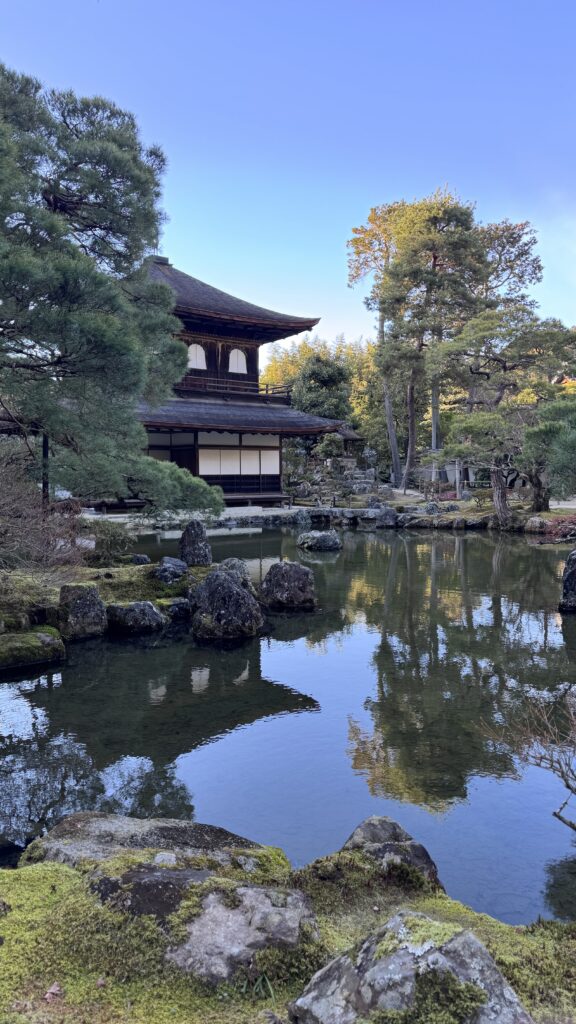
Then in the early evening, meander through the city and see what you discover by chance. Maybe you’ll find a cute shop or even a wholly unexpected district. I discovered an area filled with charming French and Spanish restaurants. It’s a goal of mine to return there for a visit, but I wouldn’t have explored the area if I hadn’t wandered off the path.
Yes, temples and shrines are essential sights in Kyoto, but spicing up your itinerary with different sights helps you avoid the dreaded temple fatigue. And it lets you make discoveries, which is what travelling is all about.
Plan your first trip to Kyoto with confidence
Planning your first trip to Kyoto can seem overwhelming, but it doesn’t have to be.
Start by booking a centrally located hotel like the Richmond Premier Hotel Shijo so you’re set for comfort and convenience.
Then build your itinerary around the season you’re visiting. A simple travel planner can help keep your ideas organized and in one place.
Balance your days with a few must-sees and leave space for unstructured strolls through town. Giving your itinerary breathing room will help you avoid temple fatigue. And you’ll discover things that become memorable travel stories.
Planning your first trip to Kyoto should feel like a celebration, not another chore.
If you’re still deciding whether Kyoto is the right fit for your trip, take a look at my full guide for first-time travellers to Kyoto.