This post contains affiliate links to trusted partners and as an Amazon Associate, I earn from qualifying purchases at no extra cost to you. All opinions are my own.
When’s the best time of year to visit Kyoto?
Short answer: there isn’t one.
The best time to see Kyoto depends on the kind of trip you want to have. Dreaming of seeing cherry blossoms since you were born? Then going in spring may be worth the crowds and higher prices. Do you prefer quiet temples, calmer streets, and room to stroll? Then winter might be the better fit for you.
I’ll walk you through the best time to visit Kyoto based on your travel style, priorities, and budget. You’ll learn what each season offers best, the gains and trade-offs you’ll make, and which time of year fits your travel style best.
Once you’re done, you’ll go away knowing exactly what type of Kyoto trip you want to plan for.
Short on time? Best time to visit Kyoto at-a-glance
⏰What’s the Best Time to Visit Kyoto?
There isn’t one. The best time to visit Kyoto depends on the trip you want to have. Every season comes with trade-offs and gains.
🌸 Visit in spring if…
- Cherry blossoms have been on your bucket list for years
- You want to experience Kyoto at its most festive and energetic
- You want to taste seasonal kaiseki menus and watch geiko performances
- You’re prepared for higher prices, bigger crowds, and unpredictable timing for blossoms.
❄️ Visit in winter if…
- You prefer fewer people at temples and room to stroll the streets
- You want lower hotel prices and the ability to walk into restaurants
- You enjoy slow travel, winter kaiseki cuisine, and exploring without crowds.
- You don’t mind colder weather and shorter market hours around New Year.
🍱 Best Season for Food Lovers
Spring offers Kyoto’s most spectacular seasonal kaiseki menus.
Winter offers easier reservations, lower prices, hearty seasonal dishes, and a calmer atmosphere.
👘 Best Season for Your First Trip
Spring is ideal if seeing cherry blossoms is your lifelong dream.
Winter is better if you’d rather experience Kyoto at a slower pace with fewer crowds and lower costs.
📅 How Long Should You Stay?
1 Day → Focus on one or two major sights, enjoy a memorable meal, and spend on convenience.
3 Days → The best balance of Kyoto’s temples, food, and cultural experiences.
5 Days → Ideal for slow travel, cafés, shopping, museums, and adding a day trip to Nara or Kobe.
💰 How Much Should You Budget?
Your budget should reflect your travel style and not someone else’s idea of a budget.
- Food lovers: Splurge on memorable meals.
- Culture enthusiasts: Prioritize temples, museums, performances, and artisan souvenirs.
- Slow travellers: Spend on comfort, convenience, and flexibility.
🎌 Special Times to Know About
Golden Week (late April–early May) → Festivals, busy trains, higher prices, and large crowds.
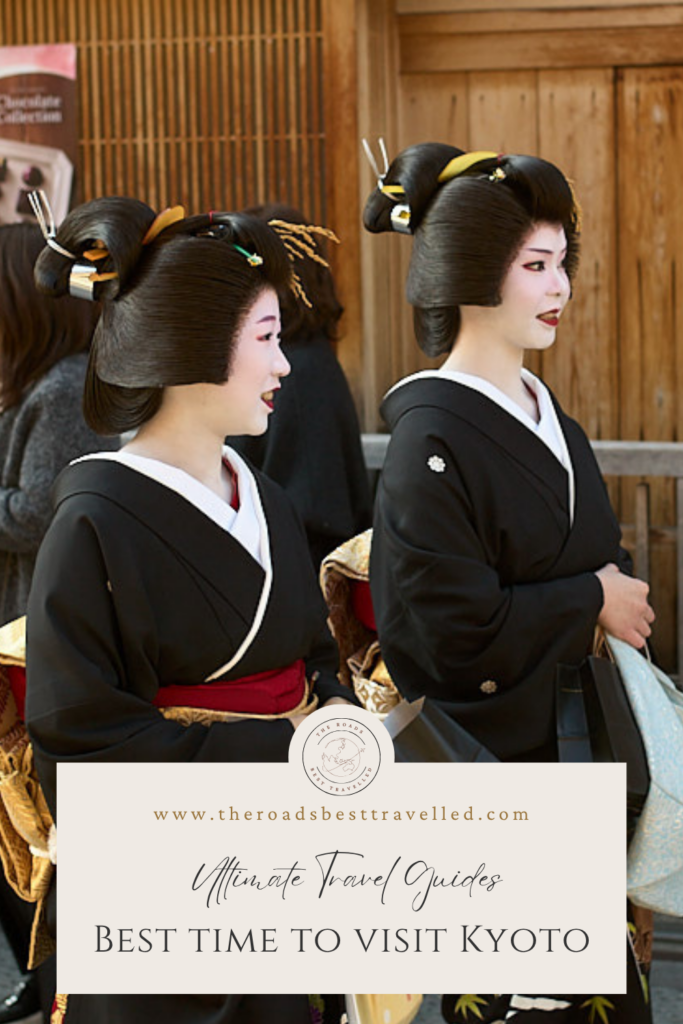
Western New Year (early January) → Quieter streets, lower hotel prices, shorter business hours, and a chance to spot maiko in formal New Year kimonos.
Obon (mid-August) → Beautiful Buddhist festivals and lantern ceremonies, but crowded trains and higher hotel costs.
✨ The Most Important Thing to Remember
Don’t choose the season someone else tells you is best.
Choose the one that gives you the experience you want. Spring gives you cherry blossoms and festival energy. Winter gives you tranquillity and space to wander. The best time to visit Kyoto is the one that matches your travel goals. It won’t be the perfect season for everyone, but it’ll be the perfect season for you.
What kind of Kyoto experience are you looking for?
Best Time to Visit Kyoto for Cherry Blossoms
Cherry blossom season is worth planning your trip around if it’s been on your since-you-were-born travel bucket list.
But there’s one, big catch: the blossoms don’t follow a schedule. Bloom timing changes every year depending on the weather, so even the best forecasts are unpredictable. You’ll have to count on a bit of luck to see blossoms.
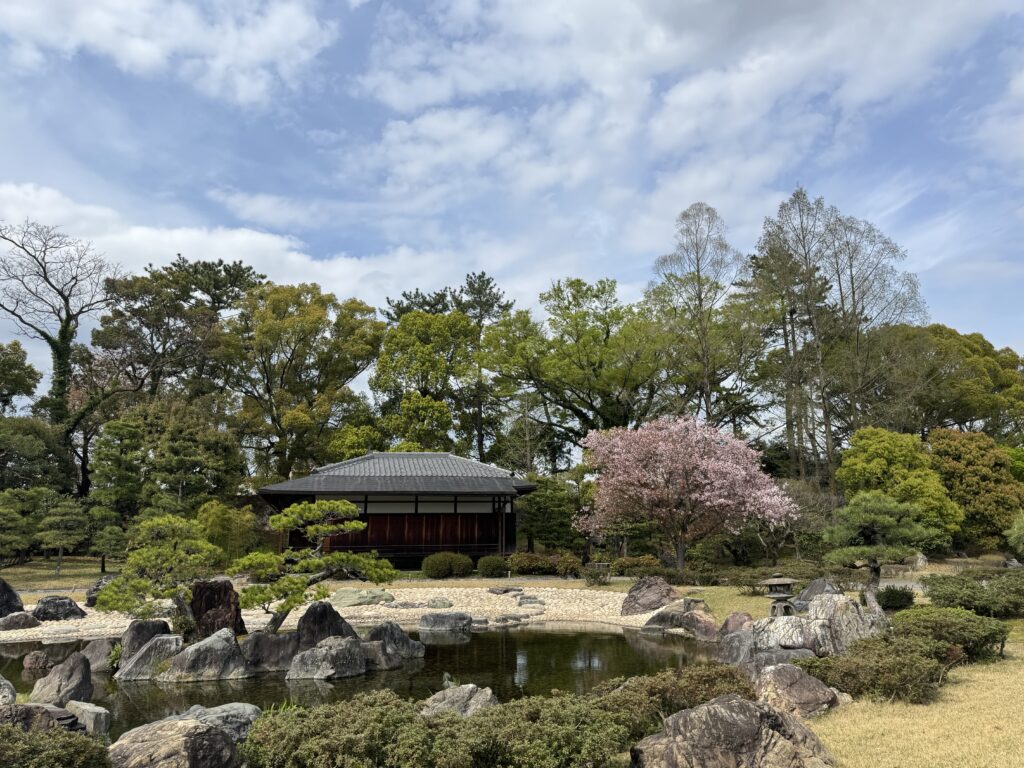
When the blossoms do bloom though, it is unforgettable. The gardens at Nijo Castle become gloriously pink. And the grounds are expansive, so there’s room to explore even if it’s crowded. The Philosopher’s Path becomes lined with blooming cherry trees and they also frame Gion’s historic streets.
The trade-offs are real. Expect larger crowds, hotels double or triple their prices, and restaurants get booked up fast. I found the weather unpredictable during my visit in late April; hot one day and freezing the next. Make sure to pack smartly.
Even with the extra planning and cost, I’d still recommend seeing Kyoto during cherry blossom season at least once. Kaiseki restaurants pay homage to spring like no other time of the year. The presentation of dishes is extra stunning.
With cherry blossoms, seasonal food, and the atmosphere, it’s easy to understand why spring is Kyoto’s signature season.
Best time to visit Kyoto without crowds
January and February are the best months to get a calmer side of Kyoto. There are little to no crowds, temples are peaceful, and the streets are dusted with snow. Winter shows why Kyoto is the capital of Peace and Tranquility.
You do have to compromise a bit. Daily temperatures are mild, around 5–10°C. Pack a warm puffer, toque, gloves. Around New Year’s, many locals are on holiday, so shops, restaurants, and markets close earlier than usual. If there’s somewhere you really want to visit, check its opening hours in advance.
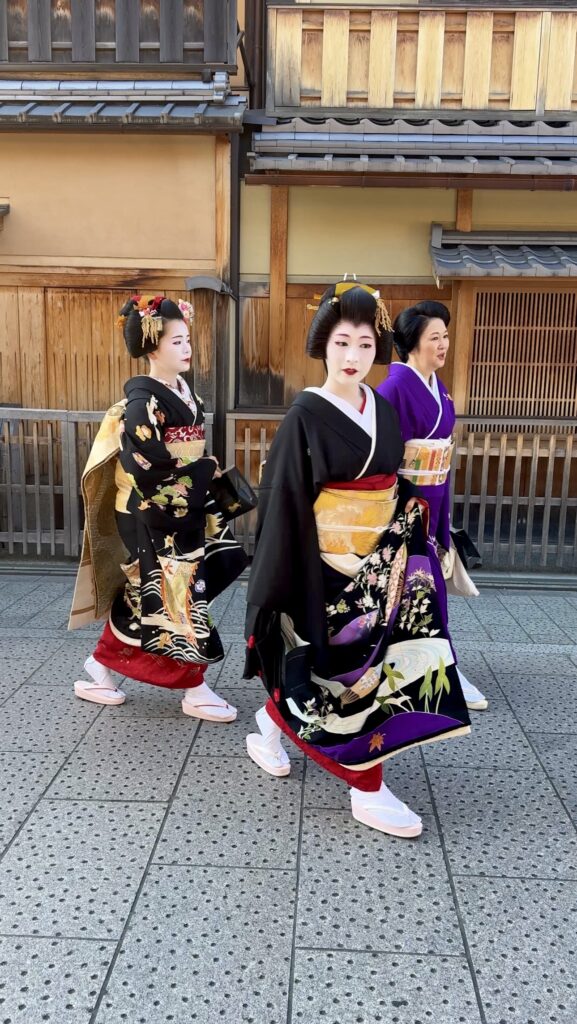
But here’s what you gain: I unexpectedly saw several maiko wearing formal black-crested kimonos in Gion. These are kimonos reserved only for New Year’s. Restaurants were easy to get into; no reservations required. And there were little to no line ups at major temples.
Winter doesn’t have cherry blossoms, but if you’re looking for peaceful temple visits, uncrowded streets, and a more tranquil experience, then winter is a great time to visit.
Best time to visit Kyoto for food lovers
Kyoto is a fantastic foodie destination all year round, but spring and winter offer different culinary experiences.
Go during spring if you’ve dreamed of experiencing kaiseki at its most spectacular. Restaurants passionately celebrate cherry blossom season. They incorporate seasonal ingredients with sakura themes and the lacquerware is specially chosen to reflect the season.
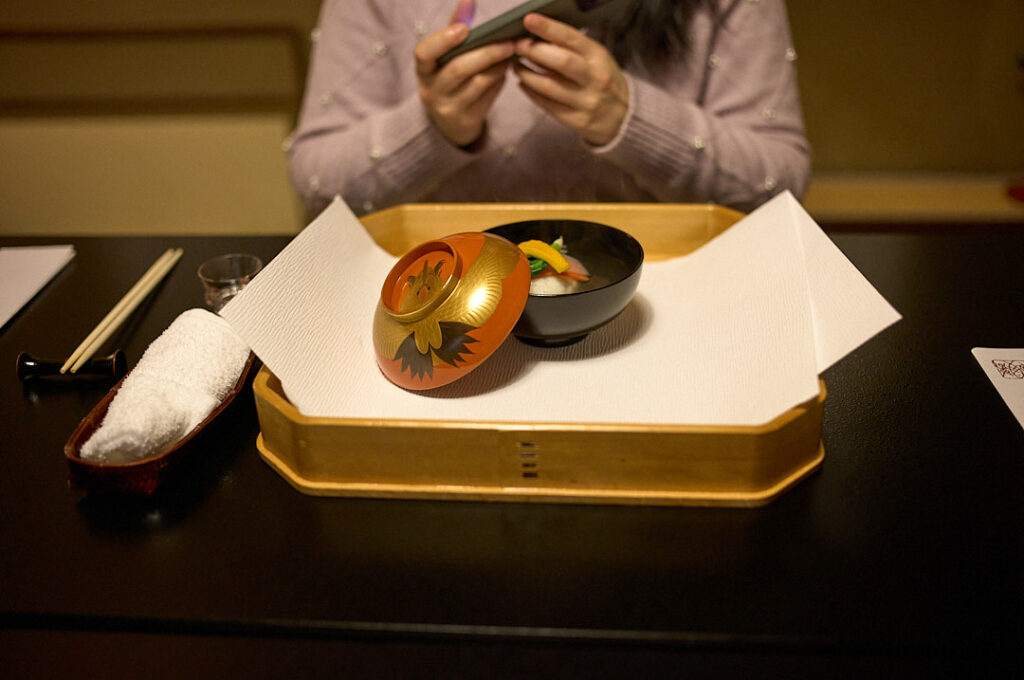
However, winter is my favourite season to eat my way through the city. Seasonal menus become heartier and more comforting. I indulged in a stone hot pot rice with uni. Absolutely scrumptious.
A big advantage of visiting Kyoto in winter is that restaurants are far easier to get into. You can enjoy exceptional meals without having to book in advance. One cold evening, I wandered into a neighbourhood steakhouse, ordered a steak and treated myself to a glass of red wine that was the same age as me (hint: about 30 years old!). It’s still one of my favourite memories from Kyoto, and I might’ve missed out on it during the spring season.
Choose spring if experiencing kaiseki at its most elegant is high on your bucket list. Choose winter if you’d rather enjoy Kyoto’s food scene with fewer crowds, lower prices, and the chance to take your time over every meal.
Best time to visit Kyoto for your first trip
Your first trip to Kyoto comes down to one question: do you want to experience the city at its most vibrant or at its most peaceful?
Spring is the best choice if you’ve always dreamed of seeing cherry blossoms. The city is in full festival mood; it’s frantic, frenetic. Gion hosts the largest geisha dance performances of the year and kaiseki restaurants are pulling out all the stops.

But trade-offs are real. Hotels are expensive, tickets for geisha shows sell out well in advance, and there will be crowds galore. And cross your fingers for luck because there’s also no guarantee the blossoms will bloom exactly when you’re there.
Winter, personally, is my favourite time to visit Kyoto. It’s cooler, temples are near empty, and hotels are less expensive (like WAY more affordable).
The main trade-off is that a lot of shops, markets, and smaller temples shorten their hours for the holidays around New Year’s. If there’s something you’re aiming to see around this time, definitely check for opening hours before you visit.
If seeing cherry blossoms has been your lifelong dream, then spring is worth the extra planning and expense. But if you’re looking for an easier, quieter introduction to Kyoto, I’d choose to visit in winter. You’ll experience Kyoto at its calmest.
How many days do I need in Kyoto?
1 day: focus on Kyoto’s main highlights
One day is enough to experience the essence of Kyoto if you focus on quality over quantity. Choose one major temple or shrine that interests you, wander the historic streets of Gion or Ninenzaka, and enjoy a slow breakfast at Coffee Bogota.
Then end the day with a traditional kaiseki dinner. Skip the day trips and don’t be afraid to use taxis to save time. With only one day in Kyoto, buying back an hour of sightseeing is worth every yen.
3 days: a perfect balance of culture and food
Three days is the sweet spot for travellers who want to experience Kyoto in depth. You’ll have time to visit iconic sights like Kiyomizu-dera or Kinkaku-ji, watch a geiko or maiko performance in Gion, and browse Nishiki Market without rushing.
You also get time to snack your way along Sanjo-dori. For me, stumbling across incredible tacos near Nishiki Market was one of my best food discoveries. Round out your trip with two memorable dinners: a traditional kaiseki meal for Kyoto’s culinary tradition and a lively teppanyaki dinner for a bit of entertainment.
5 days: immerse in Kyoto and beyond
Five days isn’t necessary, but it is the best choice for travellers who enjoy taking their time. You’ll have time to fully explore temple grounds like Fushimi Inari (make sure to hike higher into the torii gates where the crowds thin out). You get to stop into cafés, browse pottery and washi paper shops along Ninenzaka, and learn about Kyoto’s traditions through museums and cultural performances in Gion.
5 days is the ideal length of stay for adding a day trip to Nara or Kobe without feeling like you’re competing with Kyoto. Some of my favourite memories came from these slow moments. I hiked up to the Silver Pavilion and discovered the Hachi Shrine after dark. Then I ended the day with a fantastic steak dinner and a glass of wine that happened to be the same age as me.
Five days isn’t about seeing more; it’s about giving yourself the time to really immerse yourself in Kyoto.
How much should I budget for Kyoto?
There isn’t a single budget that’s right for everyone. The amount you’ll spend depends on your travel style, your values, and the kind of trip you want to have.
If you’re a food lover, budget more for memorable meals like kaiseki or teppanyaki, and save on everyday breakfasts and snacks. Culture enthusiasts will want to set aside money for temple entrance fees, museums, geiko performances, and artisan souvenirs. Slow travellers may prefer spending a little more on a centrally located hotel, so they spend less time commuting to major sights.

Your budget should also reflect the length of your stay. A one-day trip is worth spending on convenience, three days is the best balance between cost and experience, while five days gives you the flexibility to slow down and add day trips without being overwhelmed.
The most important thing to remember is that the best Kyoto budget isn’t the cheapest one. It’s the one that lets you spend on the experiences you’ll cherish once the trip is over.
Special times of the year to visit (or avoid) Kyoto
Golden week of national holidays (April to May)
Golden Week is a set of national holidays that fall within the same week. This gives Japanese residents time off to travel. It’s one of the busiest travel periods of the year and popular destinations like Kyoto will be crowded from end to end.
The biggest trade-offs are higher prices and crowded trains. Hotels book up fast and prices rise, and trains become especially crowded as people travel for festivals. Even if you’ve reserved your hotel well in advance, getting around can be tougher because of the crowds.
Golden Week isn’t necessarily a time to avoid Kyoto, but you must plan ahead. If you don’t mind paying more and can tolerate crowds, you’ll experience the city during one of Japan’s biggest travel seasons and festivities. But if quieter temples and a more relaxed pace are what you’re after, then another time of year to visit will probably suit you more.
Western New Year (early January)
Western New Year is when Kyoto is at its calmest and most tranquil. Many locals take time off to celebrate, so the city empties out and hotel prices are generally lower than during peak tourist seasons.
The biggest trade-off is that many shops, markets, and smaller businesses close early or don’t open at all during the holiday period. If there’s a particular restaurant, market, or attraction on your must-see list, check its opening hours before you go.
The biggest gain is the quieter streets. During my visit, I spotted several maiko dressed in elegant black-crested kimonos worn specifically for New Year’s celebrations. It was one of those unexpected moments that made travelling in winter pay off. Temples can be busier than usual as locals visit to pray for good fortune in the year ahead, but I found Kyoto mostly peaceful at this time.
If you don’t mind planning around shorter business hours, Western New Year is an excellent time to experience a calmer side of Kyoto.
Buddhist festival at Obon week (mid August)
Obon is one of Japan’s most important Buddhist holidays. Families gather to honour their ancestors and over several days, Kyoto celebrates with festivals and ceremonies. One of the most beautiful sights is the lantern ceremonies where lanterns are lit over rivers to guide the ancestors back to spiritual paradise.
It also makes for a fantastic opportunity for photographers.
The trade-offs are mostly the same as Golden Week. Hotels are expensive, trains are crowded, and travelling around the city gets tougher. If experiencing Kyoto’s cultural traditions is high on your list, Obon is a great time to visit.
Visit Kyoto for the experience you want
The best time to visit Kyoto is the one that fulfills your travel priorities. Spring is more expensive and more crowded, but if seeing cherry blossoms has been on your bucket list for years, then it’s absolutely worth planning and budgeting for. Winter offers lower prices, more peaceful temples, and the freedom to explore without jostling through crowds. Neither season is better; they simply offer different sides of Kyoto.
Don’t choose a season because it’s the one everyone else recommends. Choose the one that matches how you want to experience the city. Whether that’s wandering beneath cherry blossoms, or enjoying seasonal kaiseki dinner, you’ll have a better trip if you intentionally pick the time to visit Kyoto that interests you.
Pick the season that aligns with your goals, welcome the trade-offs that come with it, and you’ll create a Kyoto trip that’s uniquely yours.