

This post contains affiliate links to trusted partners and as an Amazon Associate, I earn from qualifying purchases at no extra cost to you. All opinions are my own.
JR Rail pass? ICOCA pass? SUICA pass? Are transportation options in Kyoto giving you massive headaches?
Japan is famous for their efficiency when it comes to transportation, especially rail travel. But let’s say their rules for how to use their transport passes confuse even the most veteran of travellers.
To help rid you of any aches inflicted upon you by the Kyoto bus system, I’ll break down the best ways to get around Kyoto without wasting your time, money, or your mental energy. You’ll learn when it’s worth it to walk, when taking a taxi is the better choice, and whether passes like the JR Rail Pass, ICOCA, or Suica actually make sense for your itinerary.
Most importantly, I’ll cover the common transportation mistakes first-time visitors make so you can spend less time worrying about tickets and more time enjoying Kyoto.
Short on Time? Here’s How to Get Around Kyoto
🚶 Best overall option: Walking
Kyoto is best experienced on foot, especially in areas like Gion, Ninenzaka, and the Philosopher’s Path. Walking lets you discover hidden shrines, cafés, shops, and other unexpected finds most visitors miss.
🚕 Best for saving time: Taxis
Use taxis for longer journeys across the city or when carrying luggage. They cost more than public transport but give you more time to spend exploring instead of commuting.
🚆 Best for longer distances: Trains and subways
Trains make the most sense for places farther from central Kyoto, such as Arashiyama and Fushimi Inari, as well as day trips to Nara and Kobe.
🚌 Best when the route is direct: Buses
Kyoto’s buses can be useful when they take you straight to your destination with minimal transfers. Otherwise, routes can be confusing and crowded during rush hour.
🎫 Do you need a JR Rail Pass?
Usually not. A JR Rail Pass is best for travellers visiting multiple cities across Japan. It’s rarely worth the cost if you’re mainly staying in Kyoto with only a few day trips.
💳 Do you need an IC card (Suica or ICOCA)?
Not necessarily. They’re convenient for tap-and-go travel, but many visitors can get by perfectly well with walking, taxis, and occasional train tickets.
✈️ Getting from Kansai Airport (KIX) to Kyoto
The simplest option is to buy a ticket to Kyoto Station at the airport ticket counter. Look for the Hello Kitty decaled Haruka Express train which heads directly to Kyoto Station.
⚠️ Biggest mistake to avoid
Don’t overcomplicate transportation and don’t overstuff your itinerary. The best transportation choice is the one that helps you spend less time commuting and more time enjoying Kyoto.
📋 Download my free travel planner
Use my free travel planner to map out your Kyoto itinerary, transportation, hotel details, and day trips before you arrive. It’s an easy way to stay organized and make transportation decisions ahead of time, leaving you more energy to enjoy Kyoto once you’re there.
What’s the Best Way to Get Around Kyoto?
🚶 When walking is your best option
Walking is the best way to experience Kyoto. Some of my favourite moments happened while I was walking to major attractions. That’s where I discovered small shrines tucked inside alleyways, a café specializing in siphon coffee, or a washi paper journal shop hidden along a busy road. Most people walked right past it because they were so focused on reaching the next, big temple.
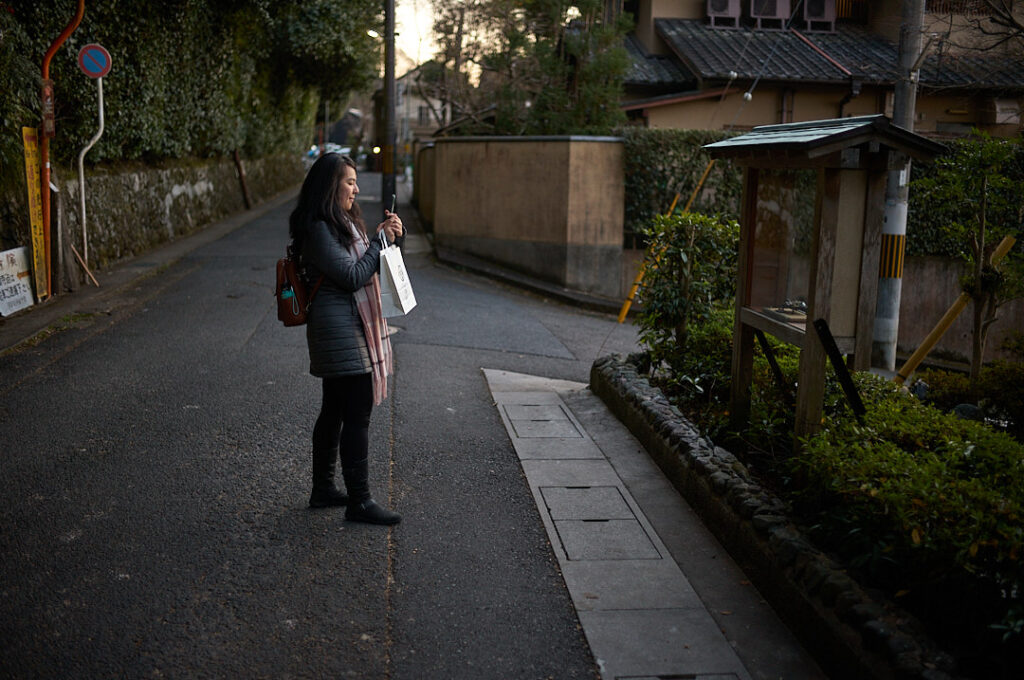
Kyoto is also more spread out than it looks on a map. Things are farther apart than they look, but certain areas are best explored on foot. Places like Gion, Ninenzaka, and the Philosopher’s Path are all places where walking makes it a better experience. You’ll notice details you’d miss from a taxi window: lantern-lit alleys, traditional wooden houses, cherry blossoms in bloom.
With that being said, I wouldn’t walk everywhere. Kyoto is a city where walking lets you immerse yourself in the historic districts, side streets, and scenic paths. Use your energy to walk where the area and experience make walking worthwhile.
🚕 When taking a taxi is worth every yen
Taxis are one of the easiest ways to save time in Kyoto. Yes, they’re more expensive than buses or subways, but you’re paying for convenience and buying extra time at the places you actually mean to see.
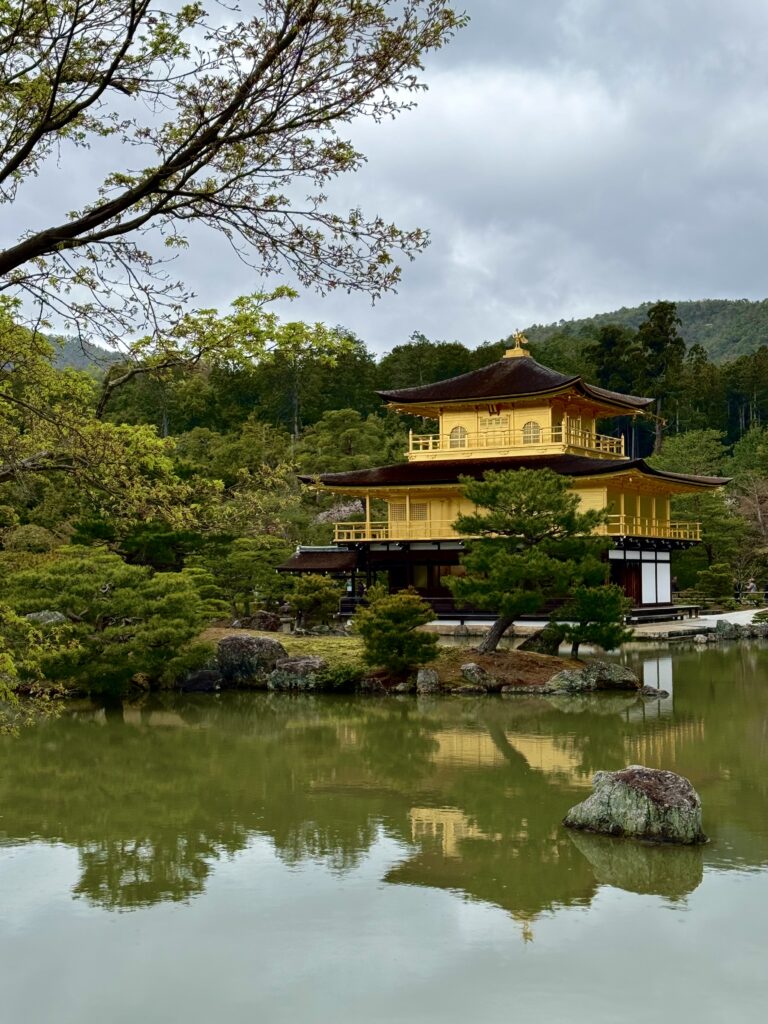
I regularly use taxis for longer trips across the city. For example, going from Kinkaku-ji to Gion is easier by taxi than trying to figure out multiple transit connections. Definitely ride a taxi if you’re hauling luggage around. A trip from Kyoto Station to Richmond Hotel Premier Shijo only takes about 15 minutes and it’s absolutely worth it.
It’s easy to hail a taxi. You can even order one through Uber and an official taxi will arrive. If you need help with directions, pull up the destination on Google Maps and show the driver the address in Japanese.
Think of taxi fares as buying yourself more sightseeing time. When a ride saves you time and energy that you’d rather spend exploring Kyoto, then that’s money well spent.
🚆 When trains and subways make the most sense
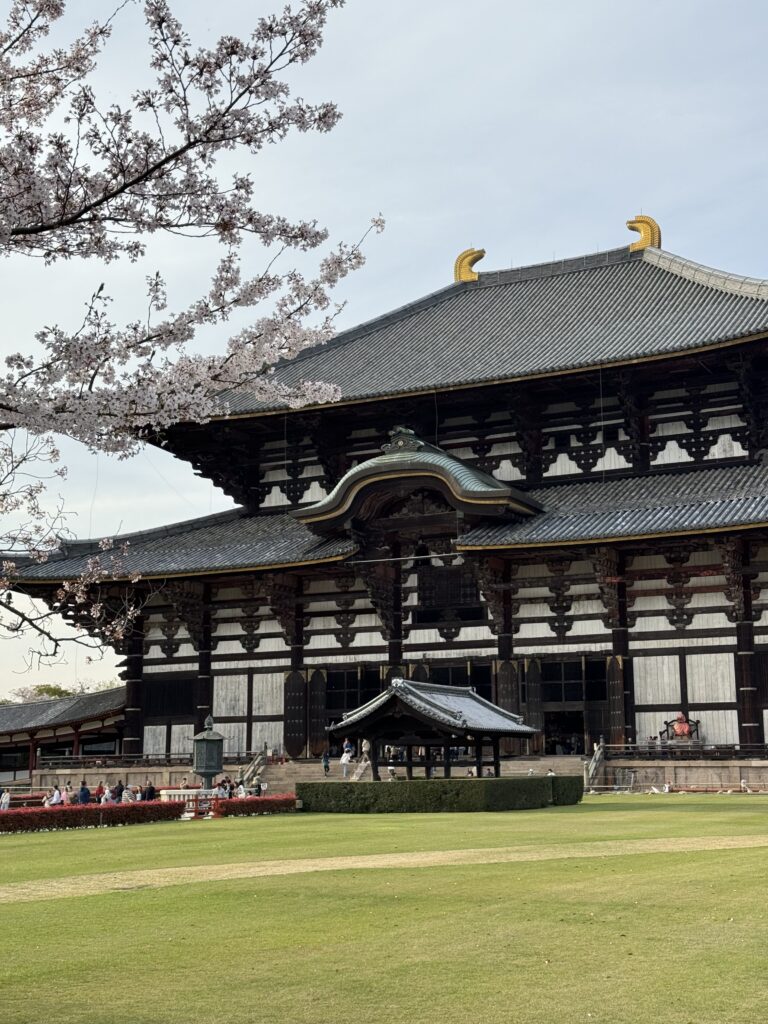
Trains and subways are most useful when you’re travelling longer distances across Kyoto. It’s much easier (and makes more money sense!) when going to places like Arashiyama and Fushimi Inari by rail rather than by walking or taxi.
The same goes for day trips to nearby cities like Nara and Kobe: it’s straightforward and affordable to get there by local commuter trains.
Personally, I don’t use the subway very often. Figuring out routes, stops, and tickets sometimes take more effort than I’d like. But if you know where you’re going, or you like the adventure of navigating a new transit system, then Kyoto’s trains and subways are efficient and reliable ways to get around.
For longer journeys, they’re often the fastest option and can save both time and money compared with taking a taxi.
🚌 When you should take the bus
Buses can be a surprisingly good option in Kyoto. Think of it like an informal sightseeing tour: you’ll pass neighbourhoods, temples, and local shops along the way.
That said, I don’t use buses very often. Routes are a bit confusing, and transfers eat into your schedule. Buses also get crowded during rush hour, which can make the trip more hassle than it’s worth.
Where buses shine is getting you directly to a sight without much effort. If a bus route takes you where you need to go with minimal transfers and minimal thinking, then it could be a good, practical choice.
They’re especially useful for places that aren’t as convenient to reach by subway or where taking a taxi doesn’t make the most sense.
Like most transportation in Kyoto, the best option depends on the situation. If a bus gets you directly to your destination without turning the trip into a commute nightmare, then hop on and enjoy the ride.
Do You Really Need a JR Rail Pass?
Probably not if you’re spending most of your trip in Kyoto.
A JR Rail Pass is designed for travellers who plan to visit different parts of Japan. Depending on your itinerary, you can buy passes that cover specific regions or the entire country for a set number of days. The main advantage is convenience: you can hop on and off many JR trains without having to buy individual tickets for each journey.
There are a few exceptions. You have to pay additional fees for reserved seats on certain trains, and the ultra-fast Nozomi shinkansen trains aren’t fully covered by the standard pass. Keep that in mind if you’re planning ambitious cross-country travel.
The pass is also tied to your passport information, so guard it well! You won’t be issued a replacement if you lose your JR Rail Pass! The passes are expensive enough that replacing one isn’t something you’d want to consider.
For travellers exploring mainly central Kyoto, a JR Rail Pass isn’t necessary. Save it for trips where you’ll be travelling across multiple cities and where you’ll be using Japan’s rail network a lot.
Do you need an IC card? And which one should you get?
Probably not if you’re planning to spend most of your time walking, taking taxis, or buying the occasional train ticket.
IC cards are prepaid transit cards that let you tap on and off buses, trains, and subways without having to buy individual tickets each time. In the Kyoto area, the two you’ll hear about most are Suica and ICOCA. You only need one. Both can be topped up with money and reloaded at train stations when your balance gets low.
Suica has a mobile app, but it doesn’t work on every phone. ICOCA is a physical card and usually requires a deposit. Before choosing one, check whether the card works with your phone, what fees or deposits are required, and whether the transit network you’ll be using is covered.
The convenience is great. Being able to tap and go is easier than buying individual tickets every time. But the cards only work within their coverage areas. If you’re travelling beyond those areas, you’ll still need to buy additional tickets.
Personally, I don’t use IC cards. I tend to walk, take taxis, or buy single train tickets when I need them. For a Kyoto-focused trip, this simple approach works perfectly well for me.
Sometimes the effort of researching card coverage, deposits, and whether the app will work on my phone causes more headaches than the value the card provides.
That said, if you’ve looked into the details and know an IC card fits your itinerary, it can absolutely save you time and make getting around easier. Like most transportation decisions in Kyoto, the best choice depends on your itinerary and how you prefer to get around.
Getting to Kyoto from Osaka Kansai International Airport (KIX)
If you’re flying into Kyoto from overseas, you’ll most likely arrive at Kansai International Airport (KIX). Your first mission is simple: get yourself to Kyoto Station. Don’t worry about buying every transport pass the moment you land.
The easiest way is to head directly to the ticket counter where English-speaking staff can help you buy a single ticket to Kyoto Station. It’s the least stressful option if it’s your first time in Japan.
If you already know you’ll be spending most of your trip in Kyoto and plan on using buses and the subway frequently, you can buy a ticket package that includes your airport return ticket along with Kyoto bus and subway passes.
It’ll save you some money compared with buying everything separately, but only buy it if you know you’ll actually use it. Otherwise, you’re paying for passes you probably won’t need.
My advice is to focus on getting to Kyoto first. You can always buy transport passes later once you’ve settled in.
The train you’re looking for is the Haruka Express, which runs directly to Kyoto Station. And here’s the easiest way to remember it: it’s covered in Hello Kitty decals. If you forget everything else after a long flight, just remember this:
Hello Kitty = Haruka Express = Kyoto Station.

Transportation Mistakes First-Time Visitors Make
One of the biggest mistakes first-time visitors make is buying a JR Rail Pass because they think they need one. The pass is incredibly convenient, but it’s mainly designed for travellers travelling between multiple cities across Japan.
If you’re spending most of your time in Kyoto and only taking a couple of day trips, the cost of a JR Rail Pass doesn’t really justify the value. Compare the price against your itinerary before committing to one.
Another common mistake is underestimating how large Kyoto is. On Google Maps, everything looks close. In reality, major temples and attractions are spread across the city and some involve long walks or climbing uphill. Walking is wonderful if you want to explore at a slower pace, but don’t feel obligated to do it everywhere.
The opposite mistake, I see travellers do, is avoiding taxis simply because they’re more expensive. Sometimes a short taxi ride saves you the hassle of navigating transfers and gives you more time to actually enjoy the place you’ve come to see. In those cases, the extra cost is often worth it.
The biggest mistake of all, though, has nothing to do with transportation. No amount of planning can save an overstuffed itinerary. Packing too much into a day forces you to rush from sight to sight without really appreciating any of them.
Leave room for wandering, unexpected discoveries, and the occasional change of plans. The best transportation choice is the one that helps you enjoy Kyoto to its fullest.
How to Choose the Right Transportation for Your Trip
Let’s be real upfront: there’s no right or wrong way to get around Kyoto. The best option is the one that makes the most sense for your itinerary, energy level, and travel style.
Some days you’ll feel like wandering. Walk the extra hour if you want to. The small shrine, quiet café, or hidden shop you discover along the way might become your favourite memory from the trip. On other days, you may be tired and would rather hop on a subway, bus, or taxi. That’s perfectly fine too.
The same idea applies to longer journeys too. Local commuter trains are often the most practical and affordable option for day trips to places like Kobe or Nara. If you’re planning to travel across multiple regions of Japan, a JR Rail Pass may give you better value instead.
Most importantly, don’t avoid an option because it doesn’t feel like the right way to travel. Taking a taxi doesn’t make you less adventurous; it doesn’t make Kyoto less authentic. Choose the options that help you enjoy the trip with less hassle and more peace of mind. After all, the goal isn’t to master Kyoto’s transportation system. It’s for you to enjoy Kyoto in all its wonders.