This post contains affiliate links to trusted partners and as an Amazon Associate, I earn from qualifying purchases at no extra cost to you. All opinions are my own.
Is 5 days in Kyoto too much? Not at all! If you’re someone who values taking your time to appreciate where you are, then 5 days in Kyoto is the exact right amount of time.
The extra days you get aren’t about cramming in more things to see; it’s a chance to enjoy the city at a more relaxed pace.
You get unstructured mornings, chances to wander the streets, and time to appreciate the temples you’re visiting. There’s less rushing between sights and you even get to revisit areas you find interesting. 5 days is also perfect for adding in day trips that complement your Kyoto experience, not detract from it.
3 days in Kyoto is the sweet spot for a focused visit, but 5 days gives you flexibility and a chance to fully discover the city while getting room to breathe.
You’re in the right place if you want guidance on how to fully immerse yourself in 5 days in Kyoto.
Short on Time? Kyoto in 5 Days at a Glance
🗓️ Trip Length
5 Days in Kyoto
Perfect for travellers who want breathing room between attractions, slow mornings at cafés, spontaneous discoveries, and enough time to add a day trip without rushing.
🏨 Best Place to Stay
Richmond Premier Shijo
A quiet, central neighbourhood within walking distance of Kyoto’s major sights, Nishiki Market, and a short taxi ride to Kyoto Station. Ideal for travellers who want maximum convenience with minimal effort.
🌸 Best Time to Visit
Spring or Winter
Visit in spring for cherry blossoms, seasonal kaiseki menus, and festival energy. Visit in winter for fewer crowds, lower prices, snow-covered temple gardens, and a slower pace.
🏯 Kyoto Cultural Highlights
✨ Kinkaku-ji (Golden Pavilion)
Kyoto’s famous gold-leaf covered temple reflected in a landscaped pond. A must-see for travellers who love architecture, gardens, and iconic Kyoto sights.
🏰 Nijo Castle
A former shogun’s palace featuring ornate gates, gold-leaf screens, and expansive gardens. Perfect for history and architecture enthusiasts.
🪨 Ryoan-ji
Kyoto’s most famous Zen rock garden where simplicity and design invites you to contemplate and reflect on life.
🎎 Gion
Kyoto’s historic geisha district where you can learn about geiko and maiko culture through museums and traditional performances.
🏮 Ninenzaka and Sannenzaka
Kyoto’s best-preserved historic streets lined with wooden houses, cafés, artisan shops, and traditional architecture.
☕ For Travellers Who Love Wandering
🍙 Sanjo-dori market
A covered shopping street where ancient onigiri snacks, black sesame crêpes, and excellent coffee showcase both old and modern Kyoto.
🦑 Nishiki Market
An energetic seafood market filled with extravagant displays, unexpected food discoveries, and one surprisingly excellent taco stand.
🏮 Ginkaku-ji and Hachi Shrine
A contemplative temple and lantern-lit shrine pairing that rewards travellers who slow down and leave room for unexpected discoveries.
🚆 Easy Day Trips from Kyoto
🦌 Nara
Best for: Sacred deer, Todai-ji Temple, history lovers, and first-time visitors looking for an easy day trip.
🥩 Kobe
Best for: Botanical gardens, pottery cafés, Kobe beef, and travellers wanting a change of pace from Kyoto’s temples.
🚶 Practical Tips
🚕 Getting Around Kyoto
Walking is the best way to experience Kyoto, but don’t be afraid to use taxis for longer distances. Save your energy for exploring, not commuting.
⛩️ Avoid Temple Fatigue
Visit one or two temples a day, then balance your itinerary with food, shopping, gardens, cafés, and wandering.
Is 5 Days in Kyoto Too Much?
Three days is the sweet spot for travellers who want to focus exclusively on Kyoto’s major temples, historic districts, and food scene. But if you prefer a slower pace, then five days is a great choice.
The extra time isn’t really about seeing more stuff, but about giving yourself chances to linger in cafés and wander neighbourhoods without a schedule. You’ll also get to discover lesser-known shrines and temples along the way.
Five days also makes it easy to add a complementary day trip to Nara or Kobe without feeling like you’re sacrificing time from Kyoto. If you value travel without burnout and opportunities for spontaneous discoveries, then five days offers a richer and more leisurely experience.
How to Spend 5 Days in Kyoto Based on Your Travel Style
For Travellers Who Want to Explore Kyoto’s Cultural Highlights
Kinkaku-ji for gardens and golden reflections
Kinkaku-ji is one of Kyoto’s most recognizable temples. And yes, the entire exterior is covered in gold leaf.
This temple is special because each level reflects a different architectural style. The ground floor follows the design of a Heian court, the second floor resembles the home of a samurai, and the top floor takes the form of a Chinese-inspired Zen temple. Kinkaku-ji is a fascinating blend of architectural influences.
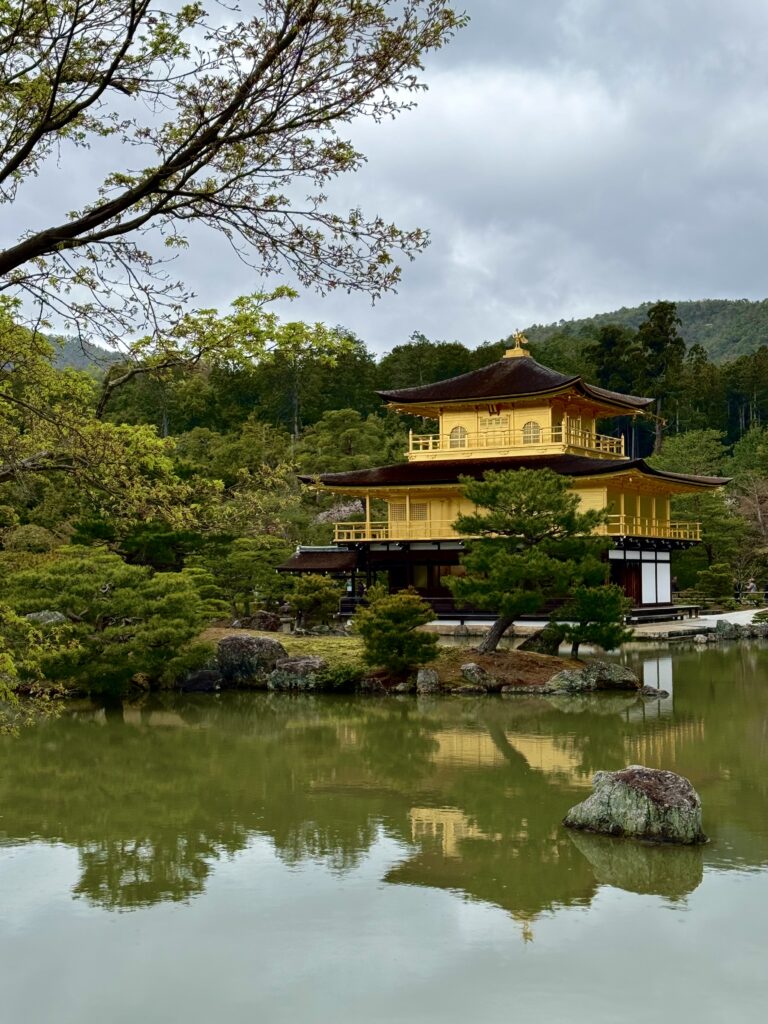
You can’t enter the temple itself, so this sight is really about walking the grounds and admiring the temple from a distance. Walk the pathways around the pond and notice how the carefully placed pines, sculpted rocks, and small islands frame the Golden Pavilion from different angles. The golden temple reflected in the water is what makes this one of Kyoto’s signature sights.
The grounds are relatively small and easy to explore. Visit early in the morning or later in the afternoon to avoid big crowds. Before leaving, stop by the temple shop near the exit and pick up some traditional good-luck charms for academic success, health, love, and prosperity.
If you enjoy architecture and design, Kinkaku-ji deserves a spot on your itinerary. It’s one of the few places in Kyoto where you can see three distinct architectural traditions reflected in a single building.
Nijo Castle for a shogun’s palace
Nijo Castle was once the Kyoto residence of the shogun who unified Japan in the early 1600s after decades of civil war. This was a political centre and if you enjoy architecture, history, and design, Nijo Castle deserves to be on your itinerary. It’s one of the best examples of castle-palace architecture in Kyoto and offers a fascinating look at how power was expressed through design.
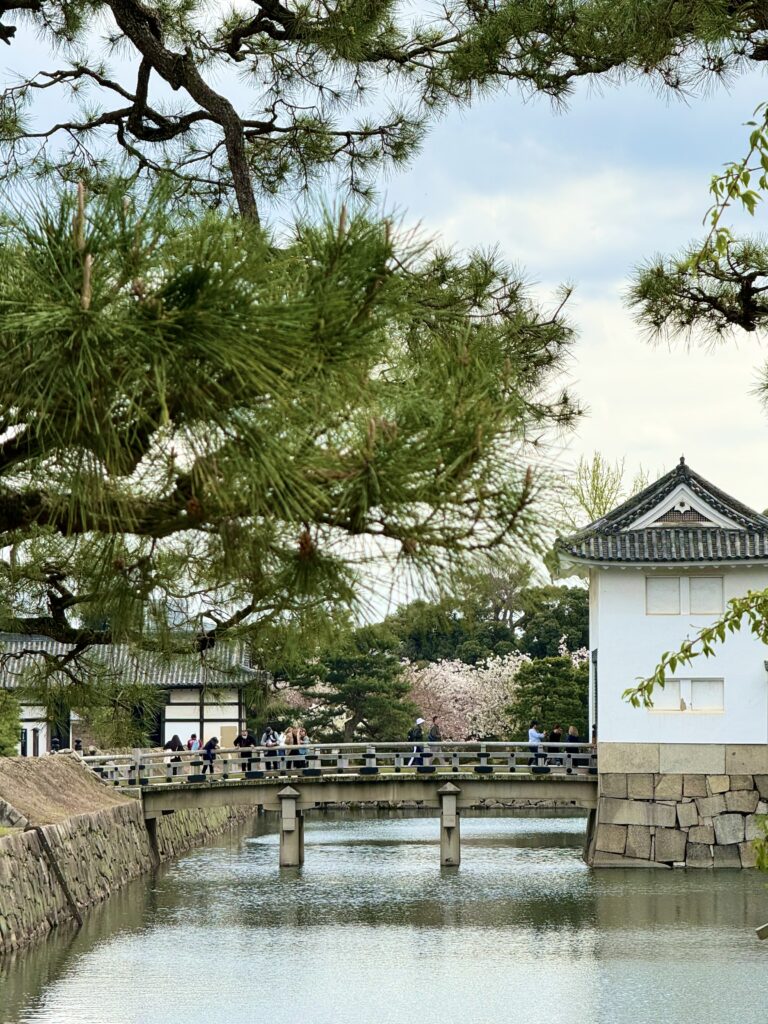
As you approach Ninomaru Palace, notice the almost S-shaped roofline of the Karamon Gate. The gate was inspired by Chinese architectural styles popular at the time, a reminder that artistic ideas have always travelled between cultures.
Inside the palace, look closely at the tigers painted on gold-leaf sliding screens. The tiger paintings are especially memorable because the artists had never actually seen a tiger. Japan has no native tigers, so the paintings were created entirely from second-hand descriptions. The result is a series of tiger paintings that look kind of awkward, even comical at times.
After touring the palace, spend time wandering the castle grounds. Notice the carefully landscaped reflective ponds, arched bridges, sculpted stones, and pine trees in the gardens that give a sense of peace and tranquility. There are rows of sakura trees lining the pathways in bright pink during cherry blossom season. The grounds are big enough that even during peak season, you can usually explore it at your own pace.
Ryoan-ji for Zen rock garden
Ryoan-ji is home to Kyoto’s most famous Zen rock garden and is one of the best places to experience the city’s quieter, more contemplative side.
If you’re interested in design, philosophy, or the way spaces can influence how we think and feel, Ryoan-ji deserves a place on your itinerary.
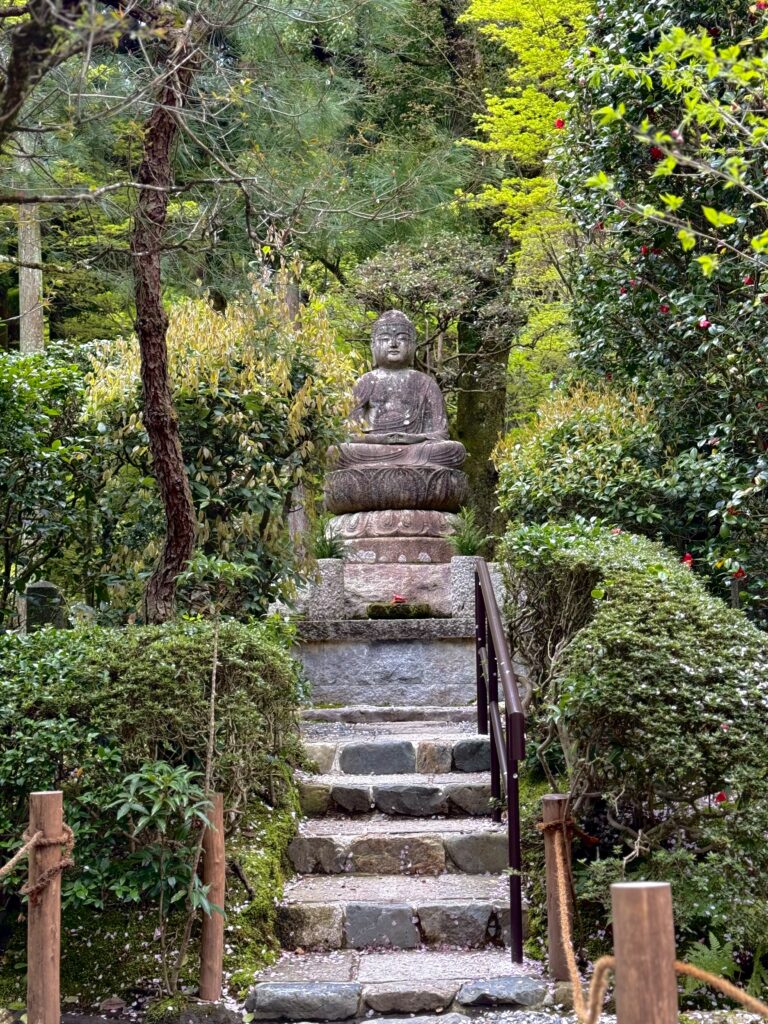
At first glance, the garden appears simple. Fifteen stones are arranged within a bed of carefully raked white gravel. But no matter where you stand, you can only see fourteen stones at a time. One stone is always hidden from view. According to Zen tradition, only someone who has achieved enlightenment can see all fifteen at once.
The garden serves as a gentle reminder that we all have blind spots and that our perspectives are often incomplete. It’s a simple design, yet one capable of generating surprisingly complex thoughts.
Remove your shoes and take a seat along the wooden veranda overlooking the garden. The best way to experience Ryoan-ji is to pause for a few minutes, observe, and let the design work on your mind. Mid-afternoon is the best time to visit if you want to enjoy it without the crowds.
Gion for geisha culture and maiko museum
Gion is Kyoto’s historic geisha district. It’s one of the best places to learn about the city’s most enduring cultural traditions.
Gion should be on your list if you’re interested in traditional Japanese arts and cultural performances. It’s where geiko (Kyoto’s official term for geisha) and maiko (apprentice geisha) train and perform, dedicating years to mastering dance, music, refined conversation, and tea ceremony rituals.
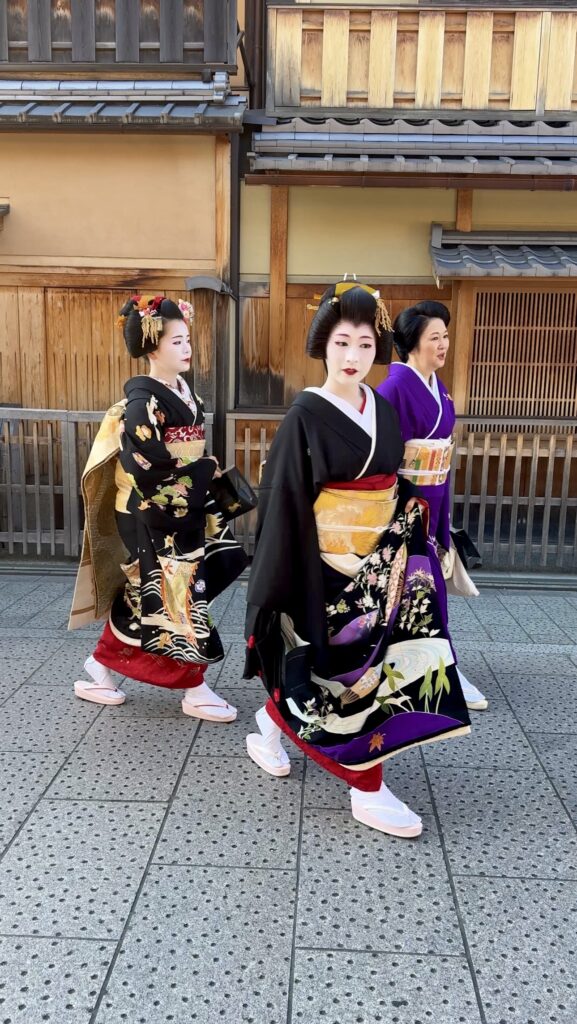
One of the most accessible ways to learn about geisha culture is at Gion Corner, the district’s public performance venue. Next door, the Geiko and Maiko Museum displays the elaborate silk kimonos, ornate hairpieces, lacquered combs, and delicate makeup tools used by the performers. Seeing these pieces up close gives you a better appreciation for the time, skill, and preparation required behind every performance.
The best time to visit is from mid- to late afternoon. This is also an ideal time to visit the museum or attend a performance. During cherry blossom season, geisha theatre shows are especially popular and often sell out quickly.
Remember that Gion is a working neighbourhood, not a tourist attraction. Follow posted signs, avoid private alleyways, and never stop or follow geiko or maiko for photographs. Respecting these rules helps preserve one of Kyoto’s most important cultural districts.
Ninenzaka and Sannenzaka for Kyoto’s best preserved streets
Higashiyama is one of Kyoto’s best-preserved historic districts. This is the closest you’ll get to time travelling to the city’s imperial past.
Definitely come here if you love history, architecture, and wandering through atmospheric neighbourhoods.
The heart of the district is Ninenzaka and Sannenzaka, two narrow stone lanes winding their way toward Kiyomizu-dera Temple. Traditional wooden machiya houses line the streets with paper-screen doors, tiled roofs, and delicate drapes hanging over shop entrances. Walking here feels a bit like stepping into a living time capsule.

You’ll find cafés, boutiques, and stores selling handmade ceramics and washi paper. This is one of the best places in Kyoto to wander without a strict plan. That’s how I ended up in a washi paper notebooks store and getting myself a handmade journal.
Expect crowds throughout the year, especially during cherry blossom season. For a quieter experience, visit in the early evening when the shops begin to close and the lanterns switch on. The streets are calmer, and it’s easier to appreciate the atmosphere that makes this part of Kyoto so memorable.
For Slow Travellers Who Love Wandering
Sanjo-dori for gourmet street food
If you love discovering a city’s history through food, spend some time wandering Sanjo-dori. This covered shopping street offers a taste of both old and new Kyoto. Grab an onigiri, a simple rice ball snack that dates back over 2,000 years, then stop at Gomaya Crepedo for one of the owner’s black sesame crêpes filled with silky black sesame cream.
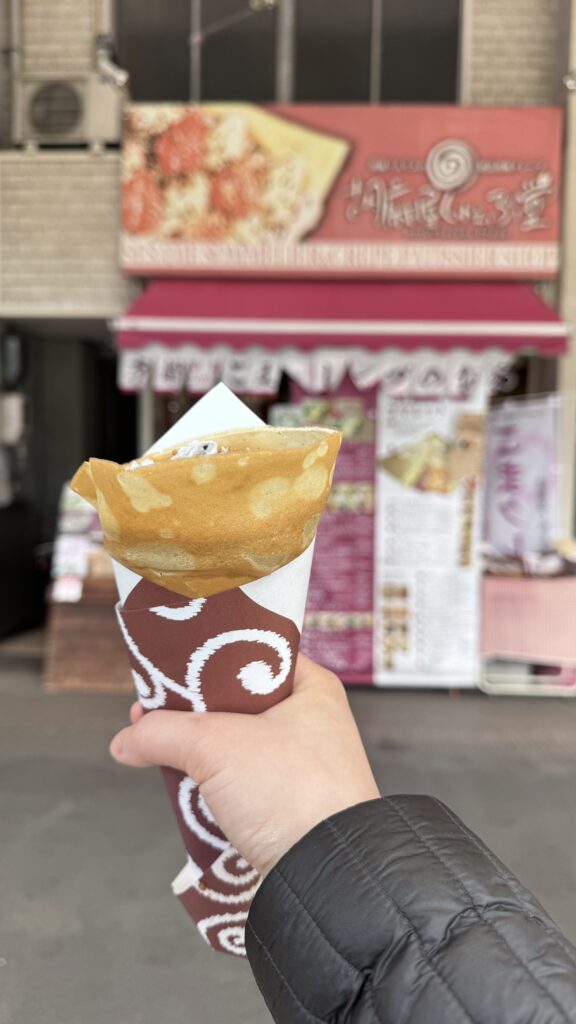
I stumbled across both while wandering the area after visiting Nijo Castle and they became some of my favourite bites in Kyoto. Before continuing your day, stop by Kammee Coffee for a flat white. Together, the onigiri, crêpes, and coffee make for a simple food crawl that captures Kyoto’s blend of tradition and modern culture.
Nishiki Market for seafood extravaganza
If you love funky displays of food in all its glory, Nishiki Market deserves a place on your itinerary. The narrow market lane is lined with extravagant displays of seafood, from giant octopus tentacles to enormous crabs and lobster displays that make the entire market feel like an amusement park for food lovers.
But my favourite discovery wasn’t the seafood.

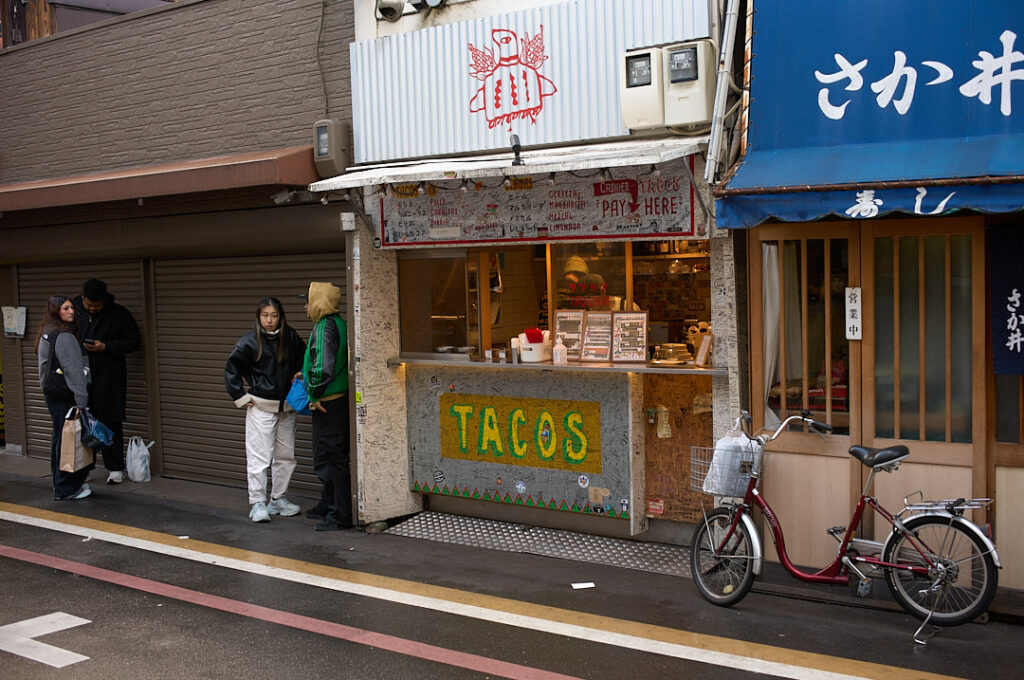
Just outside the market, I stumbled on a tiny taco stall serving some of the most flavourful tacos I’ve had outside North America, complete with hand-pressed masa tortillas and a menu written entirely in Spanish.
When the sensory overload of the market becomes too much, duck into New City Bakery for a flat white and a pastry. Between the seafood displays, unexpected tacos, and excellent coffee, Nishiki Market is a reminder that some of the best travel experiences come from the discoveries you never planned for.
Ginkaku-ji and Hachi Shrine for lantern-lit charm
If you enjoy quieter, more reflective experiences, make time for Ginkaku-ji and Hachi Shrine. Together, they offer a side of Kyoto that’s less about grand sights and more about slowing down.
Where Kinkaku-ji dazzles with gold, Ginkaku-ji boasts with silver. The temple grounds are designed for contemplation, with moss gardens, small streams, a tiny waterfall, and the striking Moon Viewing Platform, a cone-shaped mound built to reflect moonlight.
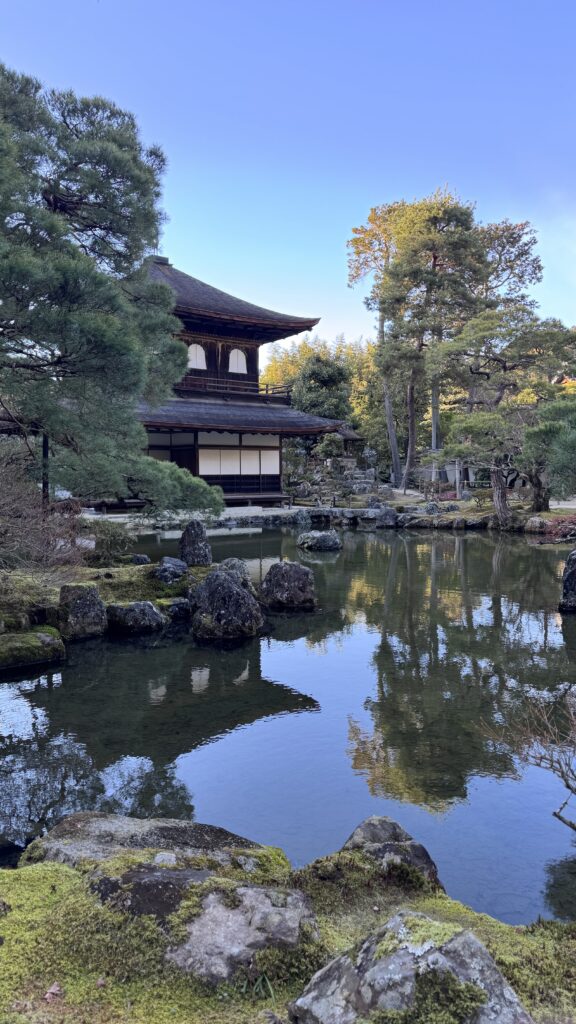
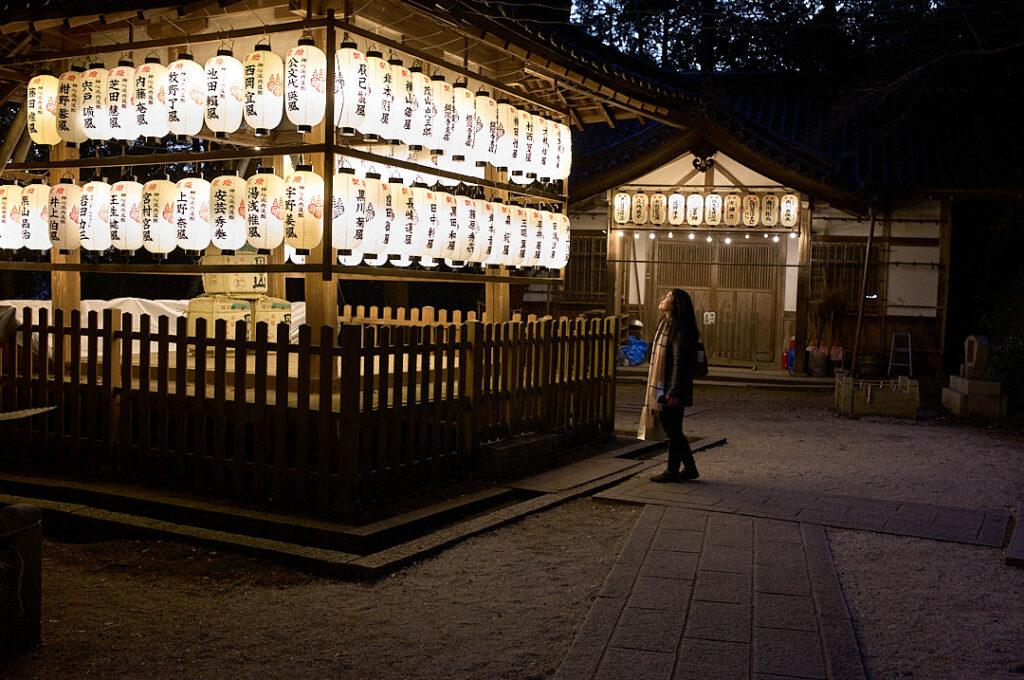
Visit during the final hour before closing to enjoy the gardens in softer light and with fewer crowds. Afterwards, wander next door to Hachi Shrine once darkness has settled in. The staircase is lit with lanterns, creating an atmosphere that feels both eerie and comforting.
The Hachi shrine is dedicated to the eight directional guardian gods who were believed to protect Kyoto’s historically unlucky corner. This shrine is often overlooked by visitors focused on the Silver Pavilion. It’s one of those lucky discoveries that remind you some of Kyoto’s most memorable moments happen when you wander off the path.
Together, these two sites reflect how Buddhism and Shintoism co-exist side by side in modern Kyoto.
For Travellers Wanting to Discover Kyoto and Day Trips
3 day itinerary for cultural experiences
Three days is the perfect amount of time to focus on Kyoto in-depth. You’ll have enough time to visit the city’s major temples, explore historic districts, experience geisha culture, and enjoy Kyoto’s food scene without rushing from sight to sight.
Visit in spring for cherry blossoms and festival energy, or in winter for quieter temples, fewer crowds, and a more relaxed pace. If you’re looking for the sweet spot to indulge in Kyoto, 3 days is the perfect amount of time to focus on Kyoto where the other 2 days are perfect for day trips.
Day trip to Nara: Sacred Deer and the Largest Wooden Temple in the World
Nara is one of the easiest and most rewarding day trips you can take from Kyoto. Nara is just a short train ride away, and it offers two experiences you won’t find in Kyoto itself: free-roaming sacred deer and Todai-ji, the largest wooden temple in the world.
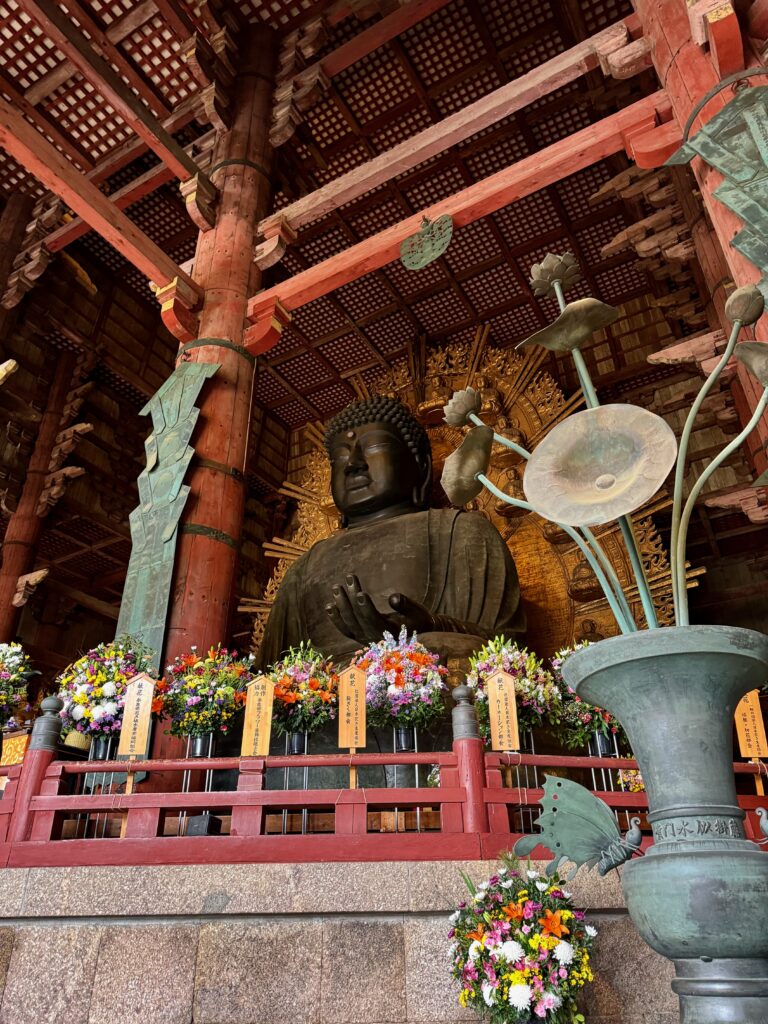
Most visitors come for the deer, which wander freely through Nara Park and often bow in exchange for crackers. But the real highlight is Todai-ji. Built in the 8th century, this enormous wooden temple houses a colossal bronze Buddha and feels appropriately grand from the moment you approach its towering gates and guardian statues.
Nara is an excellent day trip for travellers who enjoy history, temple architecture, and leisurely sightseeing. The city is compact, easy to navigate on foot, and can comfortably be explored in half a day or a full day. If you’d like to complement Kyoto’s temples with one of Japan’s most important historic sites, Nara is well worth making time for.
Day trip to Kobe: Nature, Pottery, and Kobe Beef
If you need a break from temples, Kobe makes an excellent day trip from Kyoto. Just an hour away by train, the city offers a different side of Japan through mountain gardens, artisan pottery, and local cuisine.
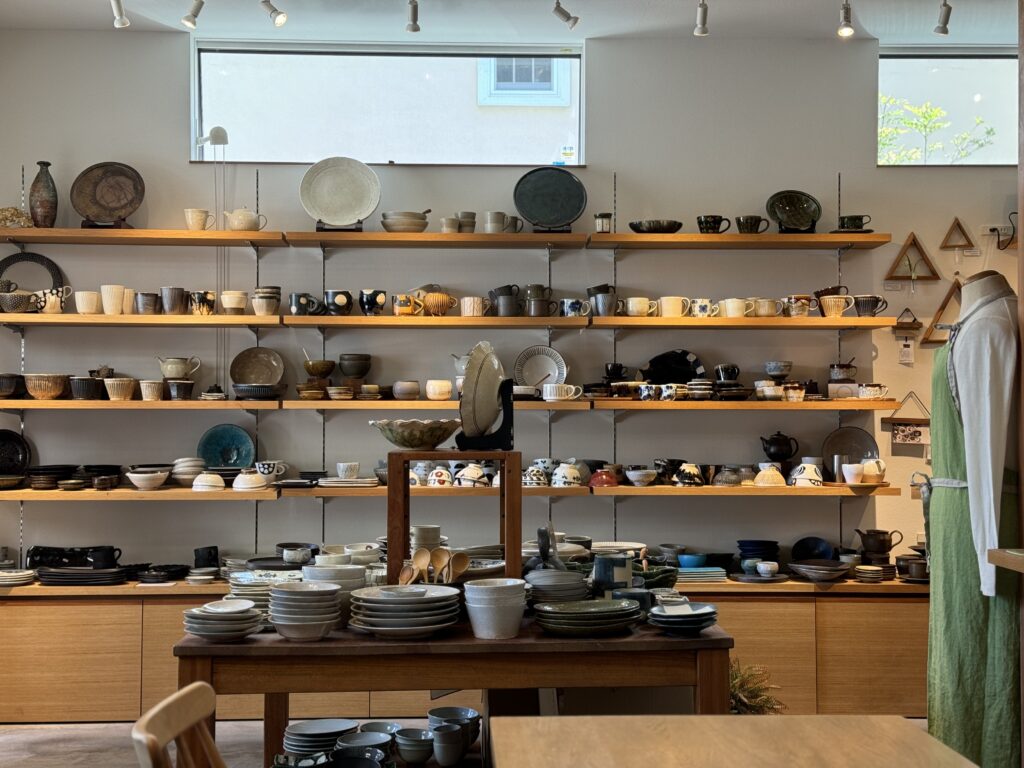
Start with a ride up to the Nunobiki Herb Garden for sweeping views of Kobe, botanical gardens, and a small perfume museum. If you’re feeling active, hike down the mountain and stop at the waterfall along the way. Afterwards, browse handmade ceramics and enjoy matcha pancakes at a local pottery café. Kobe is known for its pottery, making it a fun stop for travellers who appreciate handcrafted goods.
End the day with a Kobe beef kaiseki dinner overlooking the city. Between the gardens, pottery, and food, Kobe offers a refreshing change of scenery from Kyoto. It’s an ideal day trip for travellers who enjoy nature, artisan culture, and memorable meals.
How to Avoid Temple Fatigue in Kyoto
Temple fatigue is real. Just like cathedral fatigue is real in Europe. After you’ve seen temple number 13, they all start to blend together.
The trick is to adopt a quality-over-quantity mentality. Don’t compete with others on the number of temples seen; choose the ones that’ll resonate with you the most and space them out over 5 days.
Spend a few hours in the temple to get a feel for it and appreciate its story rather than rushing from sight to sight. You could visit 1 or 2 temples or shrines in a day. Then leave the rest of the day for wandering and serendipitous discoveries.
Take breaks by strolling and by mixing in gourmet cuisine and other sights, like castle visits. And even souvenir shopping for ceramic pottery and lucky charms.
Variety and pacing is what’ll add spice to your itinerary and help you avoid temple fatigue.
How to Get Around Kyoto During a 5-Day Trip
The best way to experience Kyoto is on foot. The city is highly walkable, and wandering between neighbourhoods is often how you’ll discover hidden shrines, quirky shops, and small cafés that never make it into blog posts.
That said, don’t force yourself to walk everywhere. Some temples, like Ginkaku-ji and Kiyomizu-dera, require longer walks and climbing up hills. When the distance starts eating into your time and energy, take a taxi by ordering it through Uber. Kyoto’s taxis are relatively affordable and well worth the cost for longer journeys.
If you plan on using public transport frequently, consider a multi-day bus and subway pass, which is usually cheaper than buying individual tickets. Kyoto is easy to navigate, so choose the option that saves your energy for exploring rather than wasting it getting from place to place.
Where to Stay for a 5-day Kyoto trip: Shijo District
Shijo is one of the best areas to stay in Kyoto if you want a central location without constant crowds. You’ll be within walking distance of places like Nijo Castle, Sanjo-dori, and Nishiki Market, while Kyoto Station is only a short taxi ride away.
I recommend the Richmond Premier Shijo because it delivers maximum convenience for value. The rooms are spacious by Japanese standards, there’s a grocery store directly below the hotel, and the quiet neighbourhood means you’ll get a good night’s sleep after a day of exploring.

For travellers spending five days in Kyoto, Richmond Premier Shijo is an ideal base that lets you spend less time figuring out directions and more time enjoying the city.
Best Season to Spend 5 Days in Kyoto
Spring and winter are the two seasons I recommend most for a five-day Kyoto itinerary, but they offer very different experiences. Spring is ideal for travellers who’ve always dreamed of seeing cherry blossoms, eating seasonal kaiseki menus, and experiencing Kyoto at its most festive. The trade-off is higher prices, larger crowds, and the need to book hotels and restaurants well in advance.

Winter is better suited for travellers who prefer quiet temples, snowy gardens, and a slower pace. You’ll spend less on accommodation, have more flexibility with reservations, and enjoy a calmer side of Kyoto, though you’ll miss the blossoms and many of the larger cultural performances.
Why 5 days lets you experience Kyoto your way
5 days isn’t necessary to get a meaningful experience out of Kyoto. Actually, you can get a meaningful trip out of Kyoto in one day if you really wanted to! But 5 days lets you breathe, wander, and discover.
5 days give you breathing room and even lets you add on complementary day trips without feeling like you’re taking time out of your Kyoto trip. 5 days isn’t about shoving more things onto your itinerary; it’s about getting a chance to indulge in the moments without rushing.
If having room to breathe and getting a chance to visit Nara or Kobe for day trips, then 5 days is a great choice for you. Make sure to get your free travel planner so you get to jump straight into planning for your trip.
Check out my full guide on what to expect in Kyoto for first-timers if this is your very first trip to Kyoto. You’ll get essential advice on what to do (and avoid) so your first trip is as enjoyable as it could be.