This post contains affiliate links to trusted partners and as an Amazon Associate, I earn from qualifying purchases at no extra cost to you. All opinions are my own.
Three days in Kyoto is just enough time to experience the temples, Zen gardens, and local cuisine, if you know where to go.
I’ve visited Kyoto twice: once during cherry blossom season and once in winter. I discovered well-known and lesser-known temples and I got to taste cherry blossom-themed kaiseki dinners.
The seasonal experiences were completely different.
Spring was vibrant and festive; winter was calm and serene, with fewer crowds at Kyoto’s Zen gardens (like the tranquil Ryoanji) and even at major temples (like Kiyomizu-dera). Neither season is objectively better; they simply show different sides of Kyoto.
This Kyoto 3 day itinerary is designed for travellers who want a meaningful introduction to the city. In three days, you can visit Kyoto’s most important temples (like the Golden Pavilion), discover some hidden gems (like the Hachi shrine), explore historic streets (such as Higashiyama), experience geisha culture in Gion, and enjoy some of the best Kyoto food all without rushing or burning out on sightseeing.
If you love history, ceremonial traditions, tranquil shrines, and thoughtful dining, three days in Kyoto (especially for first-time visitors) is enough to experience the highlights without leaving with regrets.
And if you’re looking for adrenaline, neon lights, and nonstop energy, Tokyo may be a better fit. But if what you’re searching for is a city of temples, gardens, and contemplative beauty, Kyoto is exactly where you want to be.
Kyoto 3-Day Itinerary at a Glance
If you’re wondering what to see in Kyoto in 3 days, this quick cheatsheet highlights the city’s essential temples, historic districts, and cultural experiences before diving into the full itinerary.
🗓 Kyoto 3 Day Itinerary for Cultural Highlights in 72 Hours
A well-paced three-day route through Kyoto’s temples, historic streets, cafés, and traditional dining designed to show you the city’s most meaningful sights without feeling rushed.
🏨 Where to Stay in Kyoto for 3 days (Best area and hotel)
Richmond Hotel Premier Shijo – A comfortable, centrally located hotel within walking distance of Kyoto’s temples, Nishiki Market, and historic districts while offering spacious rooms and excellent value.
🌸 Best Time to Visit Kyoto (Cherry Blossoms versus Winter)
Spring or winter – Spring in Kyoto means famous cherry blossoms and large cultural festivals. Winter offers snow-covered temples and gardens, far fewer crowds, and more affordable stays.
🏯 Top Places to See in Kyoto in 3 Days (Temples, Shrines, Historic Districts)
📍 Kiyomizu-dera Temple
An impressive hillside temple with a massive wooden balcony overlooking Kyoto and some of the city’s most iconic views.
📍 Ninenzaka and Higashiyama District
A preserved historic street where wooden houses, craft shops, and lantern-lit lanes recreates Kyoto’s imperial past.
📍 Nijo Castle
The former residence of an important shogun, famous for its ornate hand-painted screens and architectural landscaped gardens.
📍 Kinkaku-ji (Golden Pavilion)
A gold-covered pavilion, one of Kyoto’s most striking temples, sits in a meticulously maintained garden.
📍 Ryoan-ji Zen Rock Garden
One of Kyoto’s most well-known Zen gardens where you’re invited to contemplate life while admiring the 15 stones set in swirling raked gravel.
📍 Gion District
Kyoto’s historic geisha neighbourhood where traditional dance, music, and tea ceremony culture still thrive.
📍 Ginkaku-ji (Silver Pavilion)
A temple devoted to simplicity and surrounded by moss gardens and a meditative hillside walking path.
📍 Hachi Shrine
A lantern-lit Shinto shrine tucked beside the Silver Pavilion. It’s a quiet and atmospheric stop when dusk comes and the lanterns are lit.
If you’re already feeling like Kyoto is your city, then start confidently planning your trip there. Keep reading if you want in-depth details on why this 3-day trip guide is right for your travel style.
Is 3 Days Enough for Kyoto? A Complete Kyoto 3-Day Itinerary Breakdown
Yes, three days is enough to experience Kyoto without overwhelming your schedule. You can even do Kyoto in 1 day without regrets if that’s all the time you got at the moment!
With my thoughtful itinerary, three days lets you visit several of the city’s most important temples and shrines without falling into temple fatigue. You’ll explore historic districts, begin to understand the differences between Shinto shrines and Buddhist temples, and enjoy Kyoto’s local cuisine without rushing from one place to the next.
Of course, Kyoto works for longer stays too.
Five days gives you the freedom to add day trips to places like Nara or day trips to Kobe, and to explore out-of-the-way temples, gardens, and neighbourhood streets. These additional experiences make your trip richer, but they aren’t essential.
Three days in Kyoto offers a compact but rewarding introduction to the city. It gives enough time to experience Kyoto’s history, architecture, and traditional cuisine without making you feel as if you missed out on some things.
For many travellers, three days is the sweet spot.
A Compact Kyoto 3-day Itinerary for Culture, Temples, and Food
Day 1: Kyoto’s Most Iconic Temples, Shrines, and Historic Streets
Breakfast at New City Bakery (Nishiki Market)
Start your mornings at New City Bakery. It’s an easy walk from the Richmond Premier Shijo Hotel and a convenient first stop before wandering towards Ninenzaka and Kiyomizu-dera.
The café serves excellent flat whites and delicate pastries. It’s the sort of place where quality coffee is served. Order a flat white topped with swan latte art and pair it with a matcha babka or a fresh matcha scone. Then take a seat in the small, landscaped garden at the back of the café to enjoy your breakfast.
It’s a thoughtful, slow way to begin a morning in Kyoto.
Shoden Eigen-in (a hidden Zen temple)
Shoden Eigen-in is one of Kyoto’s small, mighty survivors.
The small Zen temple dates back to a turbulent time in Japanese history when Buddhism was being suppressed and many temples were destroyed. But this one lasted.
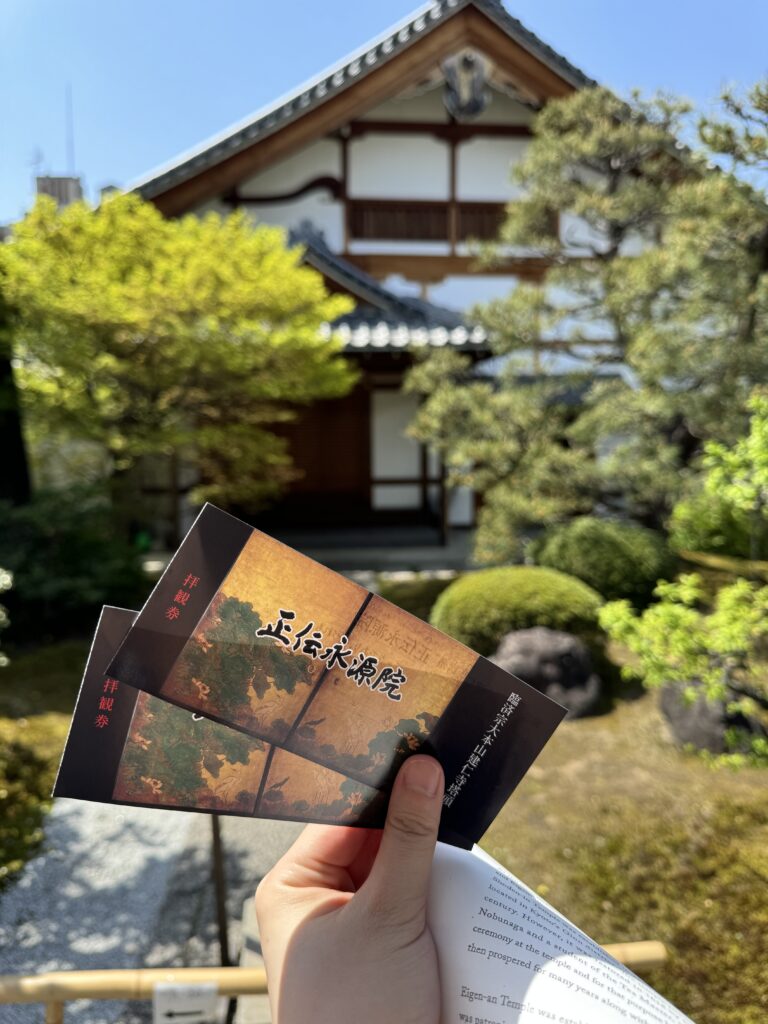
Today it opens to the public only a few times each year, usually during cherry blossom season. Getting a chance to visit this temple makes it feel like good fortune is on your side.
Shoden Eigen-in is easy to miss. It sits modestly along the street, overshadowed by Kyoto’s more famous temples. Most people rush toward the larger temples without realizing this gem hidden in plain sight.
Notice the gardens are carefully manicured with red maples, sculpted bonsai, and raked gravel to invoke meditation. Inside the temple halls, admire the delicate screens painted with herons, cranes, and drifting cherry blossoms.
Take a moment to sit on the wooden veranda facing the garden.
Kyoto is all about slowing down. This is one of those places where sitting quietly becomes part of the experience before you continue wandering through the historic streets of Higashiyama.
Ninenzaka Street (Kyoto’s best preserved historic lane)
Ninenzaka is one of Kyoto’s most beautifully preserved historic streets reflecting its imperial past. The narrow stone lane slopes gently uphill towards Kiyomizu-dera. Along the way, you’ll see traditional wooden machiya houses lining the path with traditional paper-screen doors and tiled roofs.
Walking here is like entering a living time capsule.

You’ll pass small craft shops selling handmade ceramics, delicate washi paper, and traditional sweets. Treat yourself to washi paper notebooks and cards at the charming Kyoto Karasuma Rokuhichido paper shop.
It’s more crowded here during cherry blossom season. But come in the early evening, when the shops start closing and the lanterns are lit. The streets are quieter then, and the area becomes more contemplative.
Kiyomizu-dera Temple (Kyoto’s iconic hillside temple)
Kiyomizu-dera is imposing. It rises above Kyoto’s Higashiyama district; the walk towards it is almost ceremonial.
The architecture is unmistakable. Bright vermillion arches contrast against terracotta roof tiles, guardian dragon statues watch over the grounds, and the temple complex spreads dramatically across the hillside.
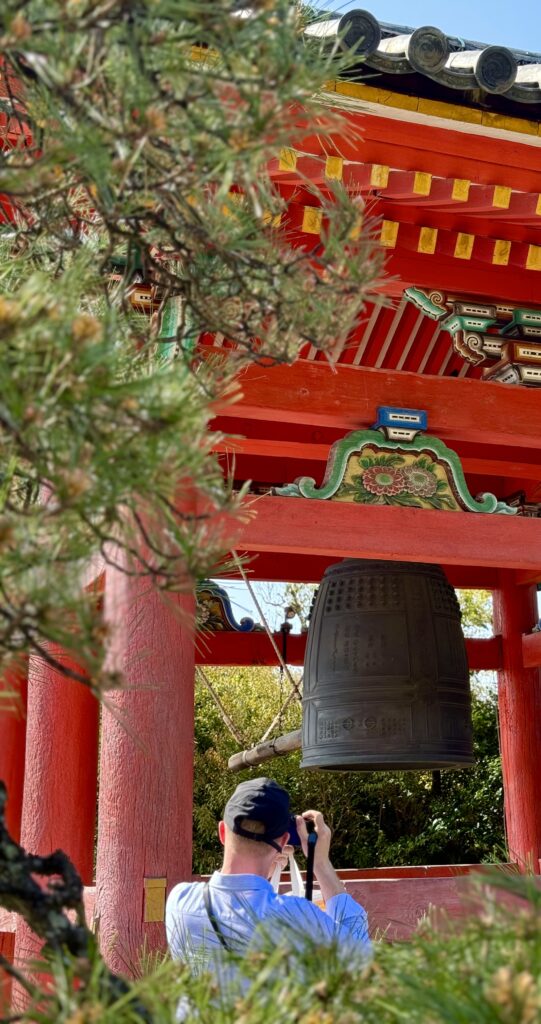
The view at Kiyomizu-dera is worth the climb. The main hall extends outward on a massive wooden platform. From here, you’ll see sweeping views across Kyoto.
This is one of Kyoto’s most visited temples so expect crowds.
To enjoy it at a slower pace and with fewer people, aim for the late afternoon or early evening. As the shops begin closing, the crowds thin out. The whole place begins to feel a little more reflective like the way a temple visit should.
Kaiseki dinner (Kyoto’s traditional seasonal cuisine)
End your first day in Kyoto with a kaiseki dinner at the Minokichi Hotel New Hankyu restaurant.
Kaiseki is a multi-course meal planned around seasonality. Each dish highlights a single ingredient at its peak with meticulous precision. We were lucky to try a cherry blossom themed kaiseki meal bursting with colour and texture here in spring.
Kaiseki is about presentation as much as the food; it’s all about delicate small bites.

Small courses arrive on lacquerware and handcrafted bowls specially chosen to complement the season. Food flavours are balanced, colours vivid, textures intriguing. Expect a slow and thoughtful meal.
It’s easy to make reservations and most places offer kaiseki dinners starting around 5,000 yen, depending on the number of courses. Book an early seating around 5:30 p.m. on a busy travel day. You’ll experience the full ceremony of the meal without finishing too late. It’s a thoughtful way to end your first evening in Kyoto.
Day 2: Nijo Castle, the Golden Pavilion, and Kyoto’s Zen Gardens
Siphon coffee ritual at Coffee Bogota
Begin your second morning in Kyoto at Coffee Shop Bogota where brewing a simple cup of coffee becomes a ritual.
The café specializes in siphon brewing. It’s a meticulous method that uses a two-chamber vacuum pot. Heat pushes water upward to the upper chamber filled with coffee grounds. Then the heat is removed and gravity draws the brewed coffee back down through a filter, leaving behind a remarkably clean, almost tea-like cup of coffee.
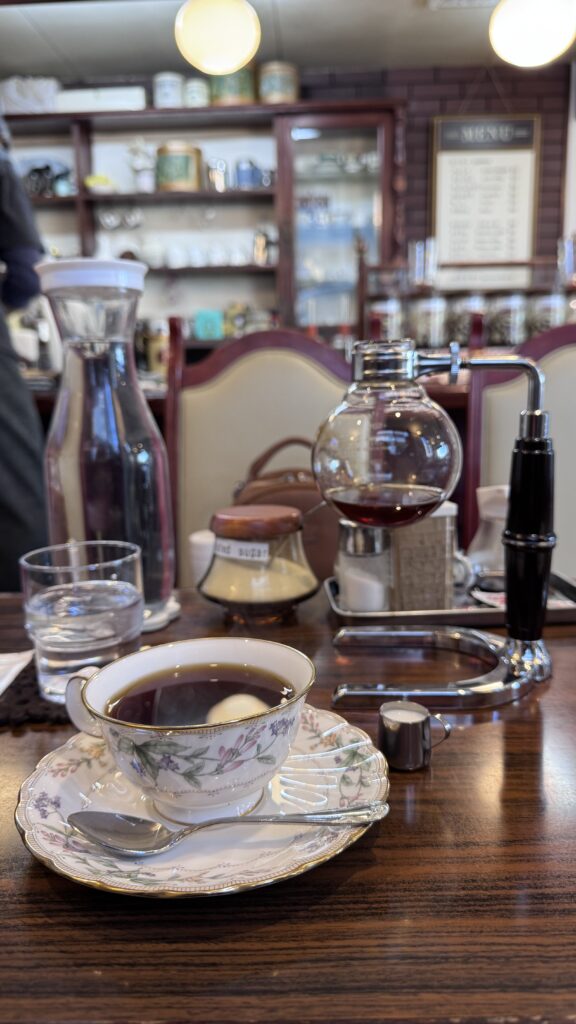
Mid-morning is the perfect time to come here. Locals start filing in around this time and the place gets lively and intimate.
Order a classic home made breakfast: thick-cut toast with homemade jam or sweet red bean paste, fresh eggs, and a small salad. Everything is prepared to order, so this isn’t a place for rushed mornings.
At the bar you’ll notice a charming handwritten sign Every order takes a long time. It’s a slightly awkward translation but it gets to the point: good things take time.
Power and politics at Nijō Castle
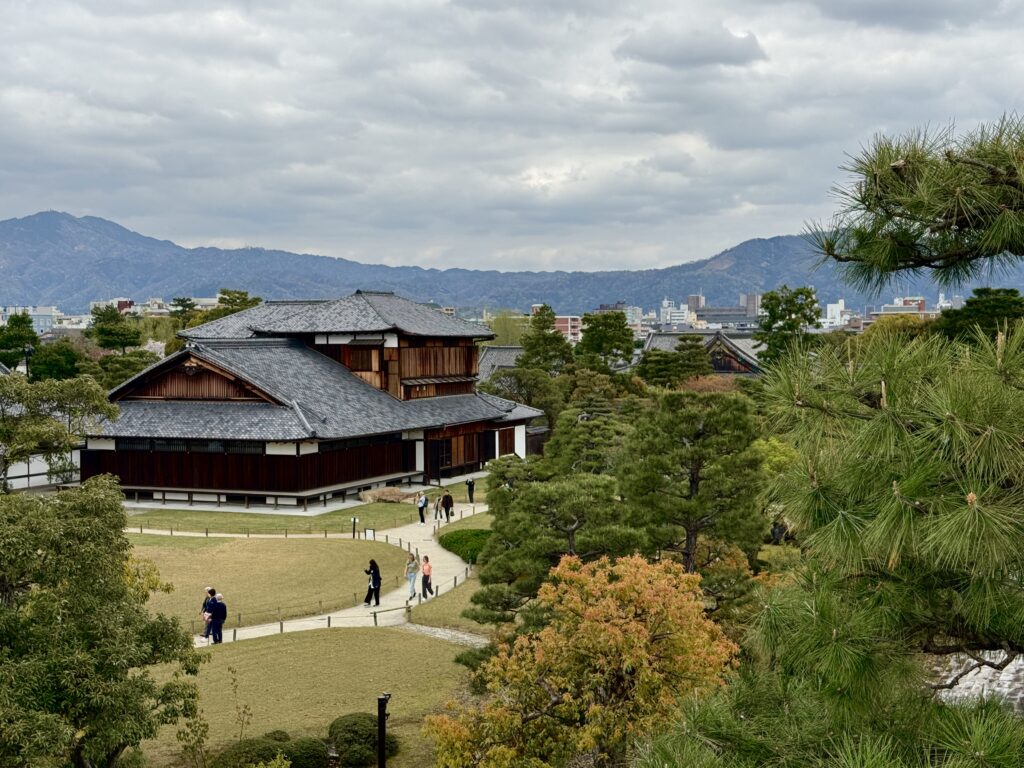
After breakfast, head over to Kyoto’s main fortress Nijō Castle.
This was once the Kyoto residence of the shogun who unified Japan in the early 1600s after a long time of civil war. The castle was a political centre where decisions were made that shaped the future of Japan.
What really stands out in the castle are gold-leaf sliding screens painted with tigers, cranes, and scenes of nature. Look closely at the tiger paintings and you’ll notice they look a bit strange.
That’s because Japan has no native tigers, so artists had never actually seen one. They painted the tigers entirely from second-hand descriptions brought over from China, which explains the slightly strange faces.
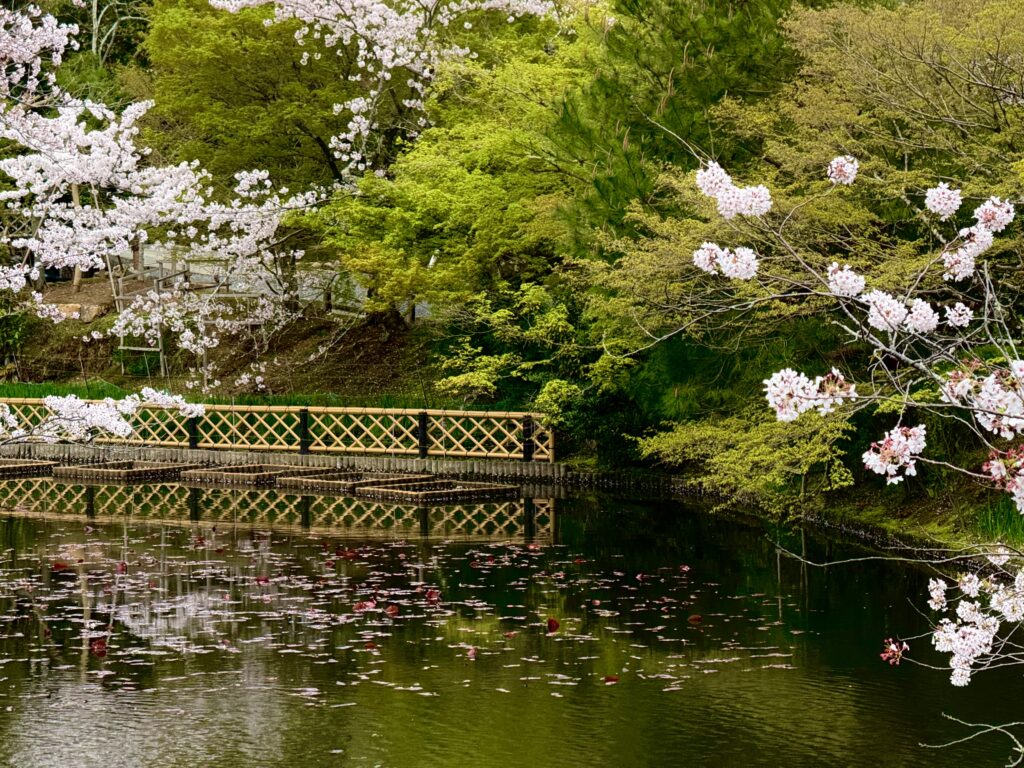
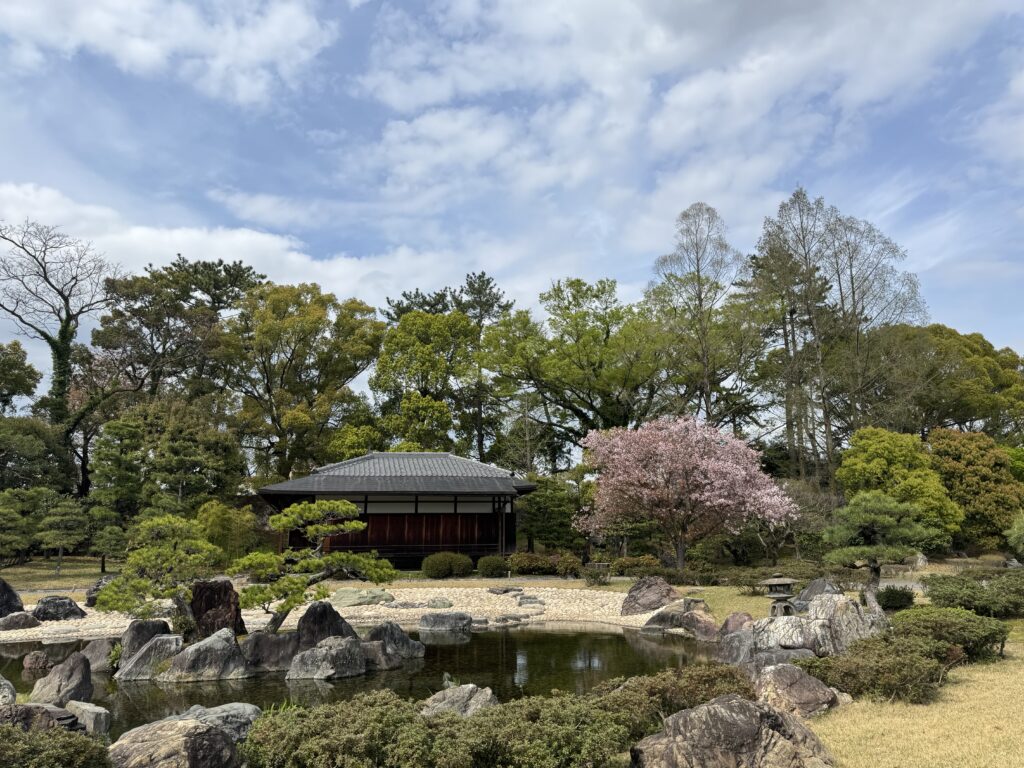
Then tour the castle grounds, especially the gardens with reflective ponds, arched bridges, sculpted stones, and carefully arranged pine trees. During cherry blossom season, rows of sakura trees line the pathways in bright pink.
Visiting Nijo Castle in the early afternoon. The grounds are expansive enough that even during peak blossom season, you can still wander and take pictures at your own pace.
Golden reflections at Kinkaku-ji (The Golden Pavilion)
Kinkaku-ji is one of Kyoto’s most heart-stopping temples.
The exterior of Kinkaku-ji is completely covered in gold leaf and reflects beautifully in the pond. Each level of the temple has architectural significance. The ground floor is designed in the Heian court palace style, the second floor resembles the traditional home of the samurai, and the top floor takes the form of a Chinese-inspired Zen temple.
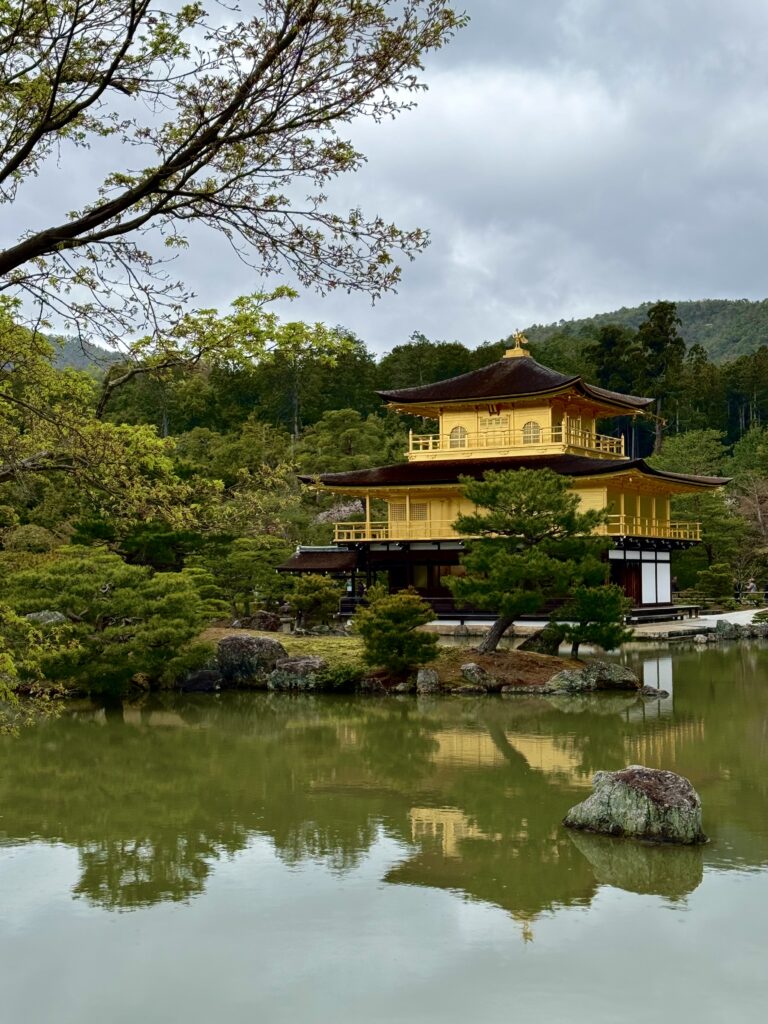
The temple doesn’t allow visitors. Your visit is mainly about touring the grounds and admiring the temple from afar. As you walk, admire the carefully placed pines, sculpted rocks, and how the small islands frame the Golden Pavilion from different angles.
The best time to visit is either early morning or late afternoon. There are fewer crowds then, giving you more chances to stroll the grounds and contemplate on life.
Before leaving, stop by the small temple shop near the exit. Pick up some traditional good-luck charms for studying, health, love, or prosperity. They’re small keepsakes that carry the spiritual symbolism of the temple that’s worth having a part of in your life.
Ryoan-ji the Zen Rock Garden
End your day at Ryoan-ji, Kyoto’s most famous Zen rock garden.
Fifteen stones are set within a bed of raked gravel. Technically, you should only see 14 stones at once regardless of where you’re standing. There’s always one rock hidden from view because, according to Zen, only people who have reached enlightenment can see all 15 stones. The rock garden is a gentle reminder that we all have blind spots; limited or incomplete perspectives.
Remove your shoes before you enter and sit along the wooden veranda facing the garden. The best way to experience the rock garden is simply to pause for a few minutes, observe, and reflect.
There aren’t usually many people here even during high-season. But come by mid-afternoon to get the place mostly to yourself for some quiet time.
Grilled skewers for dinner at a Kyoto izakaya
After a day spent wandering castles, temples, and Zen gardens, shift the mood for the evening with dinner at a Kyoto izakaya.
These casual bar-style restaurants specialize in grilled skewers cooked over charcoal. They’re small flavourful bites (usually chicken, beef, mushrooms, and other vegetables) brushed with sauce and served hot from the grill.
Order a handful of skewers, along with a pint of Asahi on draft, and enjoy a relaxed evening of Japanese pub-style cooking. After a day of Zen reflection and historic wandering, an izakaya dinner adds just the right spark of warmth and energy to close out the night.
Day 3: Kyoto’s Geisha District, Shrines at Night, and the Silver Pavilion
Crêpes and coffee at Gomaya Crepedo and Kammee Coffee
Begin your final morning in Kyoto with something a little playful.
Head to Gomaya Crepedo, where the owner has spent almost two decades perfecting her sesame crepes. The small stall sits along Sanjo-dori and is easy to spot thanks to its bright pink sign.
The specialty here is black sesame crepes. Each one is made fresh to order and filled with silky black sesame cream. It’s indulgent without feeling heavy and a treat for the morning.
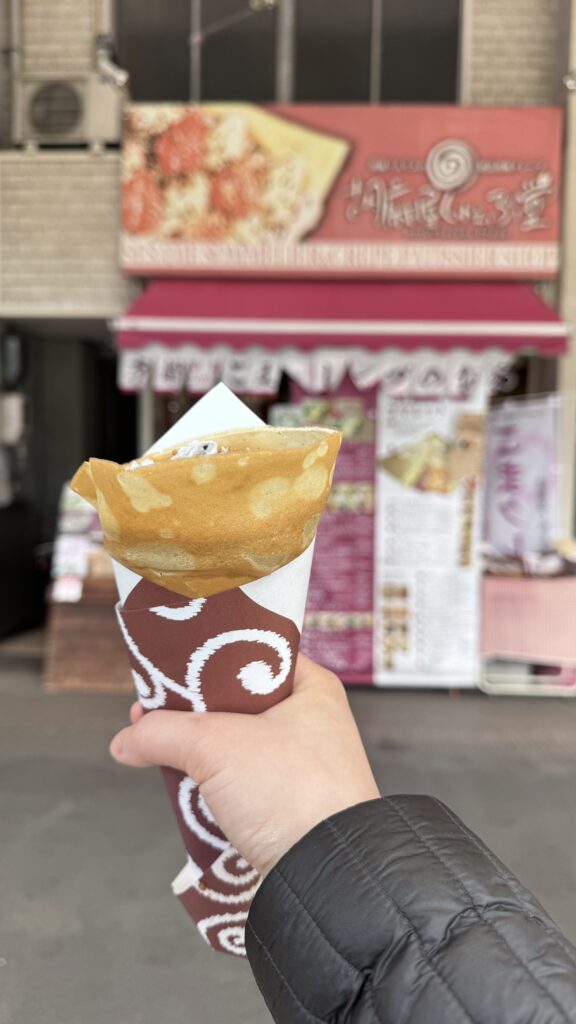
For coffee, walk over to Kammee Coffee and order a flat white. The café has a relaxed neighbourhood feel and serves consistently excellent coffee all travellers need before exploring for the day.
Coffee and crêpes, the kind of simple ritual Kyoto is known for and makes your travels all the more memorable.
Geisha culture at Gion Corner
Spend the afternoon wandering through Gion, Kyoto’s historic geisha district.
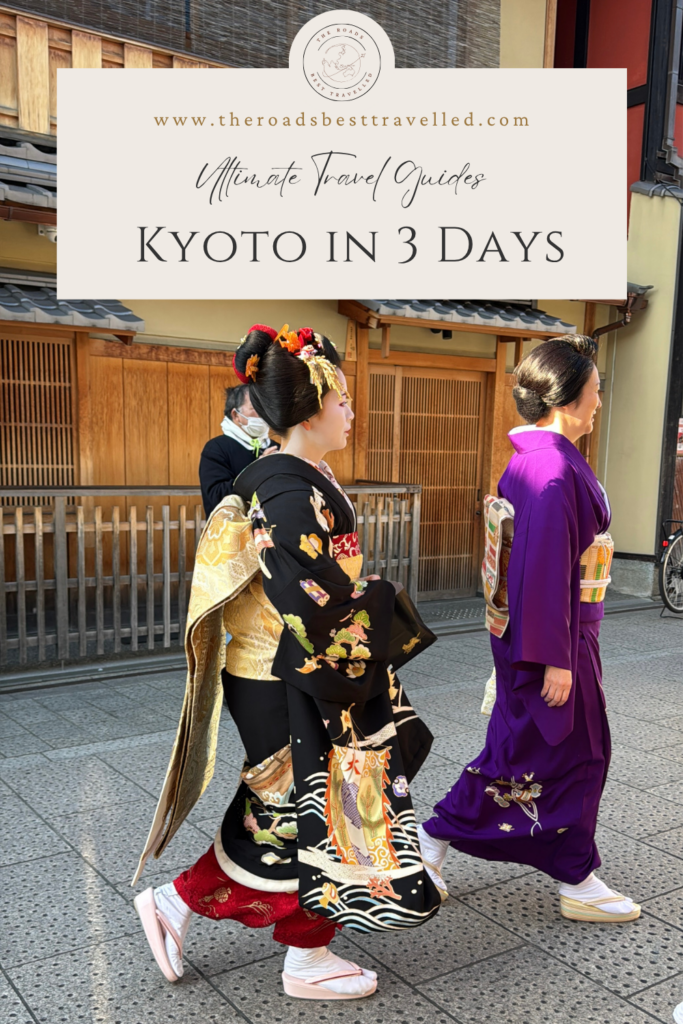
Here you may encounter geiko (the official term for geisha) and maiko (apprentice geishas). These women dedicate years to mastering classical Japanese arts like traditional dance, music, refined conversation, and the rituals of the tea ceremony. In many ways, they’re preservers of Kyoto’s cultural heritage.

One of the most accessible ways for visitors to respectfully view geisha performances is at Gion Corner, the district’s public performance venue. Next door is the Geiko and Maiko Museum where you can learn about the clothing and accessories geiko and maiko use.
You’ll see elaborate silk kimonos, ornate hairpieces, lacquered combs, and delicate makeup tools. There’s a remarkable level of detail required to prepare a maiko or geiko for performances. Seeing these pieces up close makes it clear the time and effort required to master the profession.
The ideal time to visit is mid- to late afternoon. Gion is lively but not overwhelming, and performances at the museum often run throughout the day. Full geisha theatre shows, especially during cherry blossom season, usually sell out quickly.
As you explore the district, remember that Gion is a working neighbourhood, not a theme park. Follow posted signs, avoid private alleyways, and never stop or follow geiko or maiko for photographs.
Contemplation at Ginkaku-ji (The Silver Pavilion)
Take a short taxi ride north to Ginkaku-ji, the Silver Pavilion, in the late afternoon. The best time to visit is during the final hour before closing to catch the golden light over the gardens. And to avoid crowds.
Where Kinkaku-ji (the Golden Pavilion) dazzles with gold, Ginkaku-ji expresses the opposite idea. If gold boasts, silver reflects. The Silver Pavilion embodies humility and modesty.
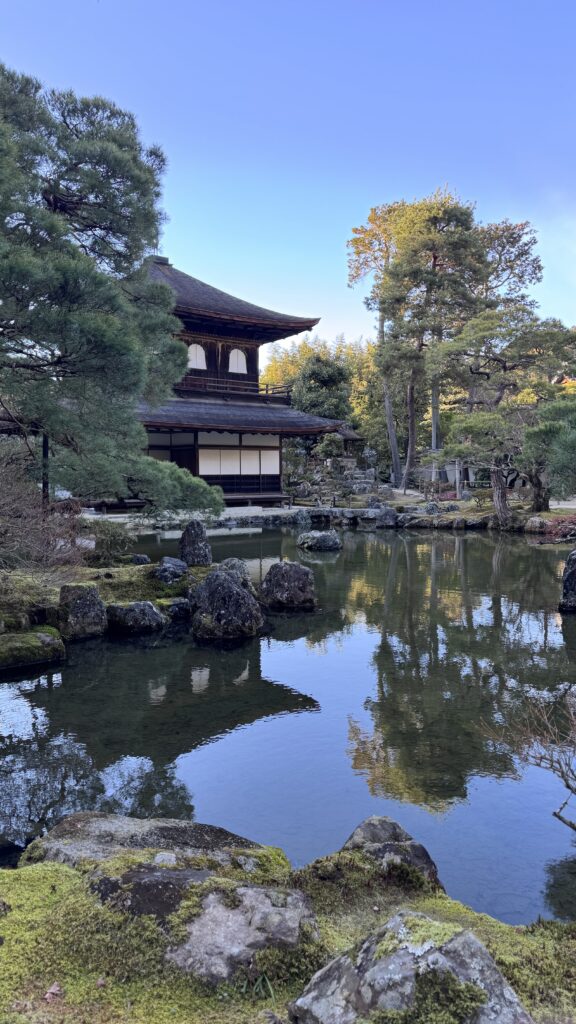
Once you enter, you’ll find a striking cone-shaped mound known as the Moon Viewing Platform. Its sculpted form was designed to reflect moonlight. Stroll the walking path through moss gardens, past small streams. You’ll spot a tiny waterfall trickle over stones. As you walk, you’ll see the Silver Pavilion from several different angles. Like many of Kyoto’s temples, they invite reflection, contemplation, and noticing things from different perspectives.
Glowing lanterns at Hachi Shrine
After visiting the Silver Pavilion area, wander next door to the Hachi Shrine once darkness has settled in.
The stairway leading up the shrine is lined with lanterns glowing in the dark. It’s almost eerie (think Man Mo temple in Hong Kong) seeing the warm glow light up the steps, but it’s the sort of quintessential Kyoto moment that’s only found after dark.
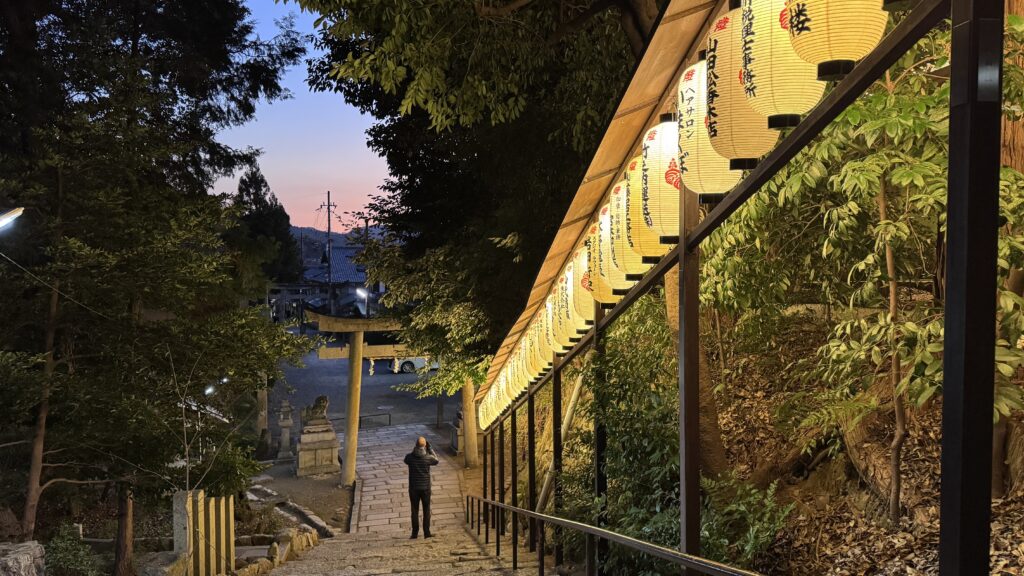
The Hachi shrine is dedicated to the eight directional guardian gods, who are believed to protect the city from evil spirits. The place where the Hachi shrine is located was historically considered Kyoto’s unlucky corner.
Most people miss this shrine entirely because they’re focused on finding the Silver Pavilion instead. It’s a special, quiet discovery for those who wander away from the big temples.
Shinto vs. Buddhism: how to tell a shrine from a temple
You’ll quickly notice two different kinds of sacred places in Kyoto: Shinto shrines and Buddhist temples.
Shinto is Japan’s indigenous religion, rooted in the idea that spirits inhabit nature, landscapes. Buddhism arrived later to Japan through China. Buddhist teachings focus on meditation, enlightenment, and understanding the nature of suffering.
Shinto shrines are marked by torii gates, which are wooden structures with two pillars and a gently curved crossbeam. Passing through a torii symbolically marks the transition from the secular into the sacred.
Buddhist temples, on the other hand, often feature pagodas, temple halls, and statues of the Buddha or bodhisattvas. These spaces are typically associated with meditation and ritual.
In Kyoto, shrines and temples co-exist in harmony.
Fiery teppanyaki dinner at Dusit Thani
End your final evening in Kyoto with a teppanyaki dinner at the Dusit Thani hotel for a delicious and entertaining dinner. Teppanyaki cooking is when chefs prepare your meal on a large iron grill directly in front of you. It’s a tasty and fun way to end a trip.
Most of the dishes will be grilled (like steak, seafood, veggies) over an iron plate. The intense heat and flame brings out the innate flavour of the ingredients; really giving them a punch in taste.
Despite the theatrical cooking, the atmosphere at Dusit Thani is polished and relaxed. Yes it’s slightly indulgent, but indulging in something special is a perfect way to end a wonderful trip.
This meal wraps up everything Kyoto is about: tradition, craftsmanship, and dedication to artistry.
And make reservations because seating is limited.
Best Time to Visit Kyoto (Cherry Blossoms or Winter Travel)
You’ll get a different feel for Kyoto depending on the season.
The best time to visit Kyoto depends on the experience you’re hoping to have. Visit in spring if you’re hoping to see famous cherry blossoms, or visit in winter if you prefer the calm atmosphere of the winter months.
Neither season is better; they simply present different moods.
Spring in Kyoto: Cherry Blossoms and Festival Energy
Spring in Kyoto is iconic for its cherry blossoms.
You’ll see shades of pink everywhere from temple gardens, to castle grounds, to the narrow historic streets. The weather is cool and comfortable making it easy to tour the city without having to pack heavy clothing.
Seasonal cuisine also reaches a creative peak at this time. Many kaiseki restaurants craft spring menus around cherry blossom themes, making every dish reflect the colours of the season. If you appreciate the marriage of aesthetics and gourmet dining, you’ll enjoy a delectable kaiseki meal.
Cultural performances are also grand and intense. Geisha dance festivals and traditional events are at its height during this time. But Kyoto in spring comes with a bigger price tag.
Hotels fill quickly, most restaurants require reservations, and famous temples are crowded throughout the day. But if seeing cherry blossoms has been a lifelong dream of yours, then it can be absolutely worth it to visit Kyoto in spring.
Winter in Kyoto: Tranquil Temples and Snowy Gardens
Kyoto in winter is calm, meditative, as if time slows down just a bit.
Wake up to mornings with snow on the temple roofs or garden grounds. It’s remarkably serene with the white fluffy stuff around. There’s also a lot less people in the city. Temples feel more spacious without the crowds and restaurants welcome walk-in guests more often.
Everything is also a little less pricey since it’s considered low tourist season. Your money goes a lot farther in winter than in spring. But there are some trade-offs.
Gardens won’t be in bloom, and there won’t be any performances at the larger geisha theatres. The first week of January is where many businesses close briefly for the New Year holiday. If there’s a particular temple or restaurant you want to go to, make sure you check the schedule during this time.
But for travellers who enjoy a slower pace and reflective moments, winter offers Kyoto at its most peaceful.
So Which Season Is Better?
If you want Kyoto at its most vibrant and celebratory, then go in spring, especially from late March through early April if you want to catch the cherry blossoms in bloom.
If you prefer quiet streets, contemplative temples, and fewer crowds, and lower prices, then winter may be the better choice.
Where to Stay in Kyoto for this 3-Day Itinerary
When you’re on a compact three-day visit, location matters more than charm. That’s why staying at the Richmond Premier Shijo gives you the most value for money on your three-day trip.
It’s the hotel you go to for minimal effort, but maximum results.
The hotel is in a central part of Kyoto. You’ll easily reach most of the city’s major sights by foot, subway, or by taxi. Kyoto Station is close enough that you’ll get to this hotel hassle-free in a short taxi ride.

It also makes it easy to do day trips when you return for a longer stay. The neighbourhood is also quiet enough that you’ll get a good night’s sleep (which is something you’ll want after long days of exploring).
Rooms are also unusually spacious by Japanese standards and feature comfortable Western-style beds along with deep soaking tubs. Let’s just say taking a hot bath after a long day of walking will feel like a small luxury.
Another practical perk is that there’s a grocery store located directly below the hotel. It’s perfect for grabbing quick snacks or fresh fruit before heading out for the day. From here you can easily walk to Sanjo-dori, where you’ll find cafés, crêpe stands and the Nishiki Market.
Richmond Premier Shijo might not be a traditional ryokan or a particularly charming boutique stay, but it wins where it matters most for a short visit: comfort, convenience, and excellent value for money.
For travellers following this three-day itinerary, this hotel is an ideal base that lets you spend less time finding directions in the city and more time actually experiencing it.
How to Get Around Kyoto (Walking, Buses,Trains)
The best way to experience Kyoto is on foot. Kyoto is a very walkable city, but subways, buses, and taxis are readily available where it makes sense to ride public transport.
Most of the city’s major historic districts, temples, cafés, and markets are located pretty near each other. But the best part is wandering in between neighbourhoods: you’ll discover some quirky shops, traditional noodle joints, and some lovely, lesser-known shrines.
If you plan to venture out farther into the city, Kyoto’s public transportation system is reliable and easy to navigate. Get a multi-day transportation pass that gives you unlimited rides for a set amount of days if you think you’ll be riding the subway a lot. This will save you the cost of buying single tickets for every ride.
Taxis are another practical and affordable option.
Compared with many major cities, Kyoto taxis are reasonably priced and widely available. You can easily hail one on the street or request an official taxi ride through Uber.
Getting around Kyoto is straightforward (it’s even easier if you pack light!), which leaves you free to focus on discovering temples, walking the gardens, and exploring the city at your pace.
How Much Does a Kyoto Trip Cost for 3 Days?
Kyoto is surprisingly affordable compared to many major cities like Toronto or Paris.
Your largest expense will probably be accommodation. For a short visit, choosing a centrally located hotel is worth the price. Staying in a convenient area reduces travel time, cuts down transportation costs, and makes it much easier to get to Kyoto’s historic districts and temples.
Dining is your second largest expense.
Many travellers come to Kyoto to experience kaiseki, the city’s signature
multi-course seasonal cuisine. Prices vary and they’re usually a splurge, but worth it, because it’s Kyoto’s most memorable dining experience.
Transportation is another expense, but manageable if you’re willing to mix riding public transport with walking.
Many visitors purchase multi-day transit passes that bundle subway and bus rides together. But Kyoto is also a very walkable city. Some of your best discoveries will be because you walked and stumbled into a hidden shrine or out-of-the-way ceramic shop.
Your smallest expense will probably be entrance fees to temples and museums.
Most historic sites charge modest admission fees that help maintain gardens, buildings, and other cultural treasures. This makes it easy to visit several important temples without dramatically affecting your budget.
Overall, Kyoto offers excellent value for travellers who appreciate culture, architecture, and thoughtful dining. With a bit of prioritizing, it’s entirely possible to experience the city meaningfully without spending excessively.
Why this Kyoto 3-Day Itinerary Works for First-Time Visitors?
Three days in Kyoto is enough to experience the city’s signature cultural landmarks without burning out.
This itinerary focuses on the places that represent Kyoto’s character best: historic temples, sacred shrines, preserved historic streets, meaningful meals, and small doses of stillness along the way. Over the course of three days, you’ll explore remnants of imperial Japan, begin to understand the relationship between Shinto shrines and Buddhist temples, enjoy Kyoto’s café culture, and taste the seasonal kaiseki cuisine the city is known for.
You’ll enjoy the city and make discoveries without turning the trip into an endless checklist of landmarks.
If Kyoto is the city for you, the next step is simple: choose your travel dates, reserve a centrally located hotel, and book any cultural tours you’d like to experience. You can also download my travel planning guide to organize your itinerary, reservations, and ideas before your trip. If you’re staying even shorter than 3 days, then see my 1-day Kyoto itinerary where I highlight the city’s essential sights. And if this is your first visit to Kyoto, head to my complete Kyoto travel guide for first-time visitors to help you understand what makes the city so remarkable before you arrive.